Commercial · Aurora
Commercial-Grade Lock Replacement in Aurora
The kitchen delivery door gets shouldered open more than a hundred times a shift, and lately the latch slips past the strike plate instead of catching it on the first push.
In plain words
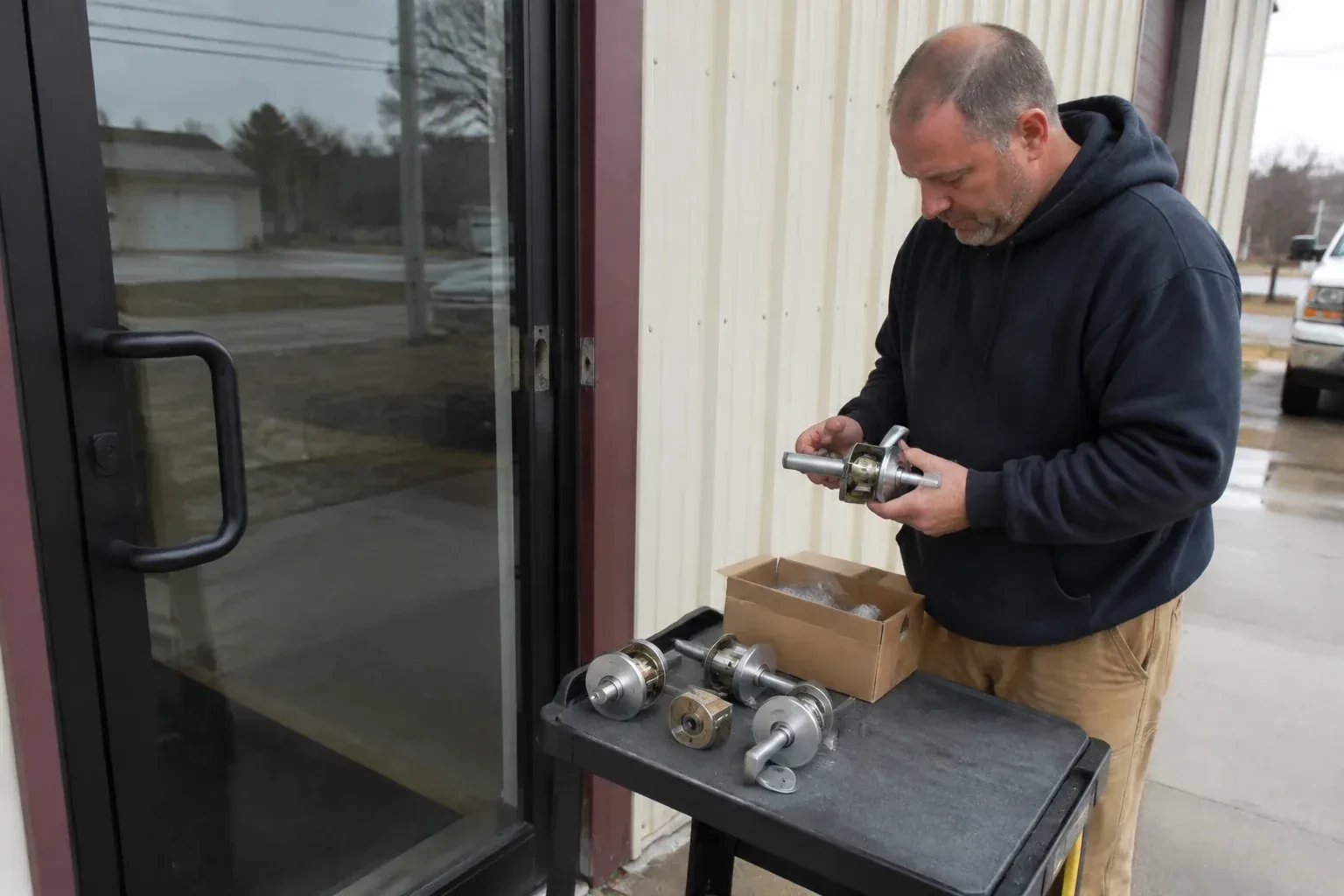
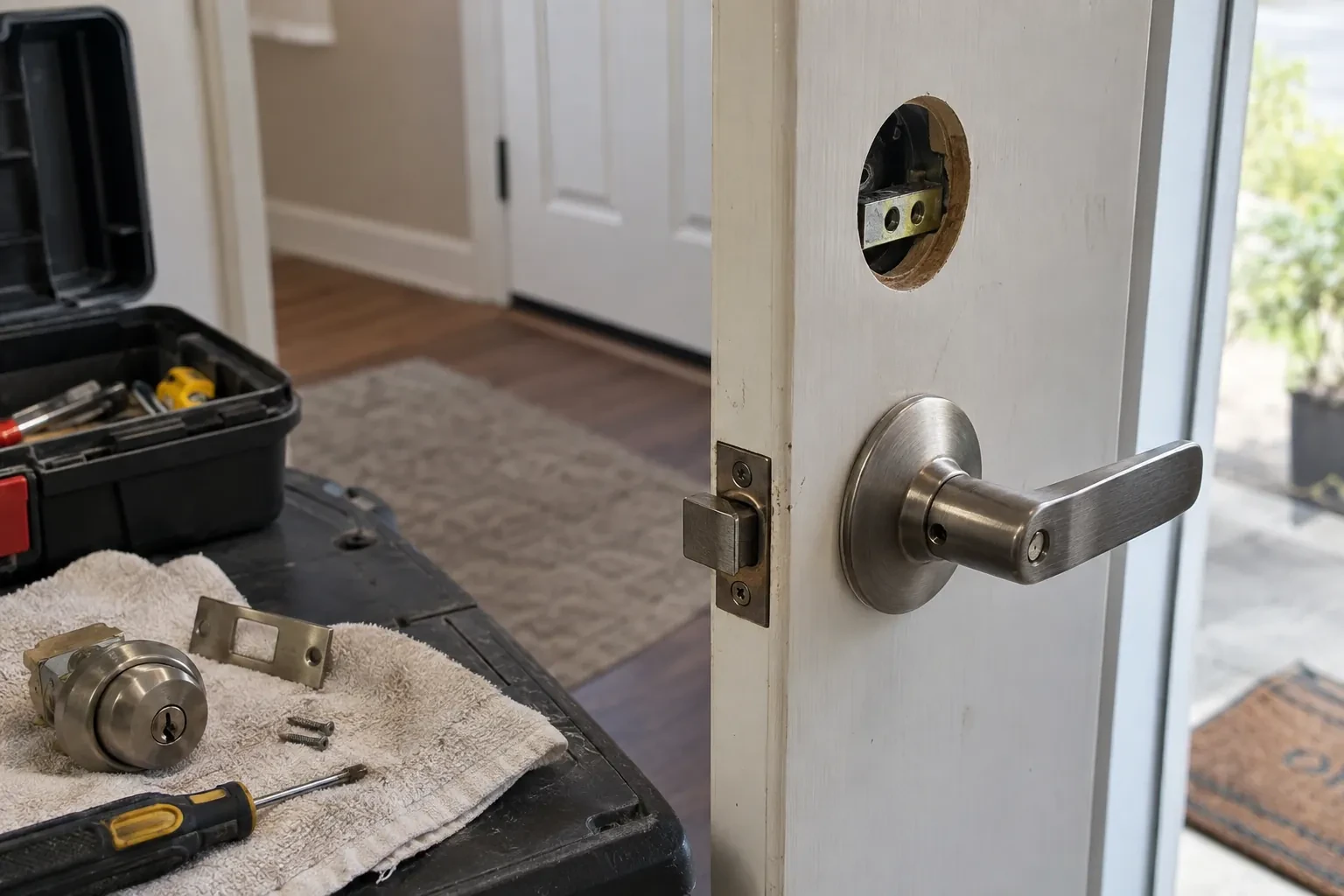
Commercial-grade lock replacement swaps hardware that is worn, damaged, mismatched or simply not rated for a business door with hardware built for that duty: a mortise lock body, a heavy cylindrical lockset, or a narrow-stile lock or hookbolt for an aluminum storefront door. The locksmith reads the door's construction, the traffic the opening takes, and any key or access-control system already running before choosing a replacement. New hardware is keyed into that existing system rather than left to stand on its own, so one business ends up with one coherent set of locks instead of a patchwork of whatever was fitted door by door over the years.
How the visit goesThe electric strike buzzes the moment the receptionist presses the release button, but the door still needs a shoulder to get past the latch, as though the two pieces were never matched.
Commercial-Grade Lock Replacement
How the visit goes
Looking at how the opening is actually used
A door's traffic shapes which hardware belongs on it. A staff entrance opened a handful of times a day tolerates lighter-duty hardware than a delivery door shouldered open on every shift, and a customer-facing storefront door needs a finish and function that hold up under public use. The locksmith asks how often the door opens, who uses it, and whether it is propped, wedged or held open in daily practice, since a door habitually held open needs hardware and a closer arrangement that account for that use rather than fighting it.
Matching the cylinder to the business's key system
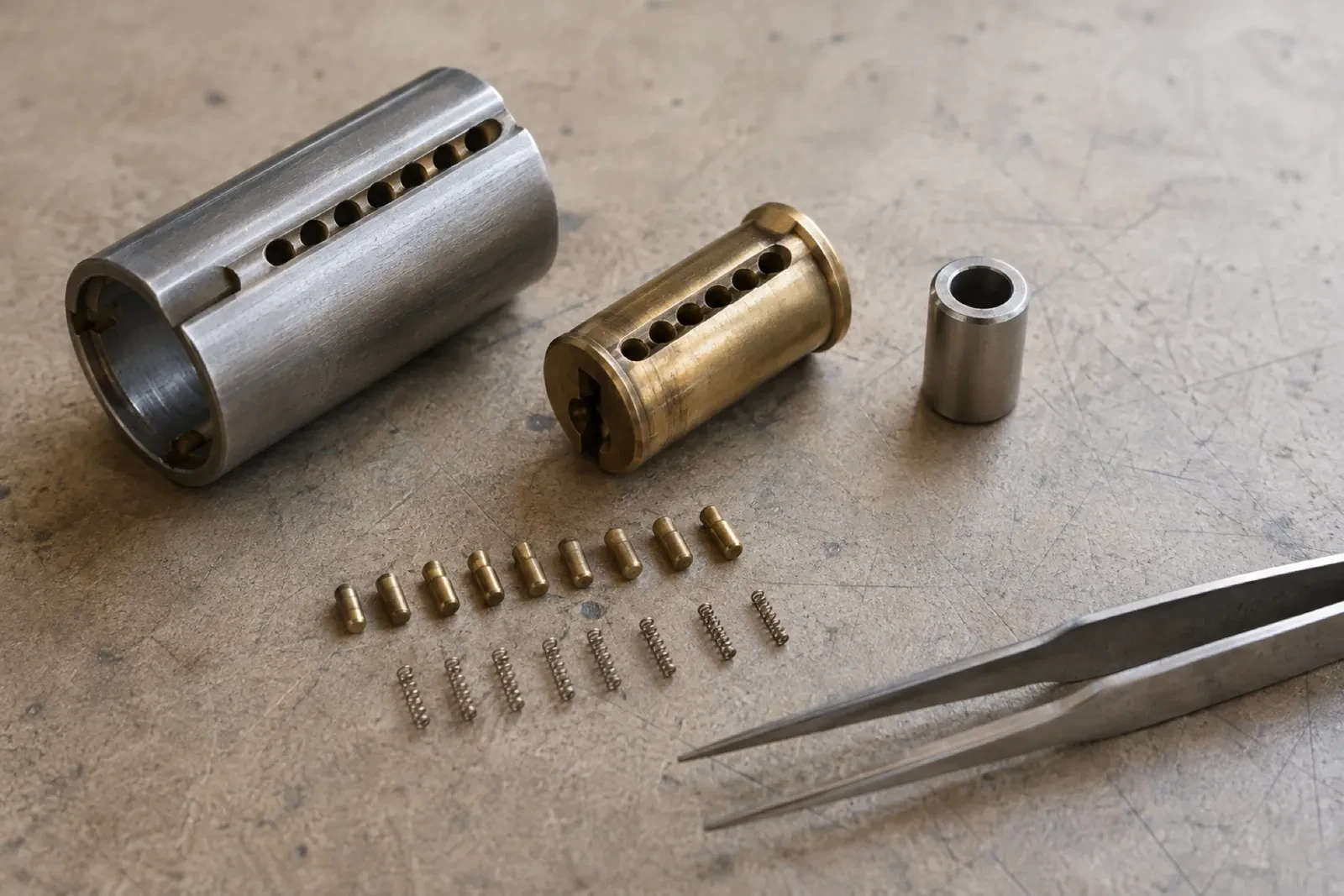
The cylinder installed is the one agreed during the assessment: keyed into an existing master or grand-master system, set up as a new interchangeable core the business can rekey itself later, or cut to a restricted keyway that limits who can order duplicate keys. Where several doors are being brought onto one system in the same visit, cylinders are combinated so a single key or a defined set of keys operates every door that is supposed to share access.
A door rated for the job it does
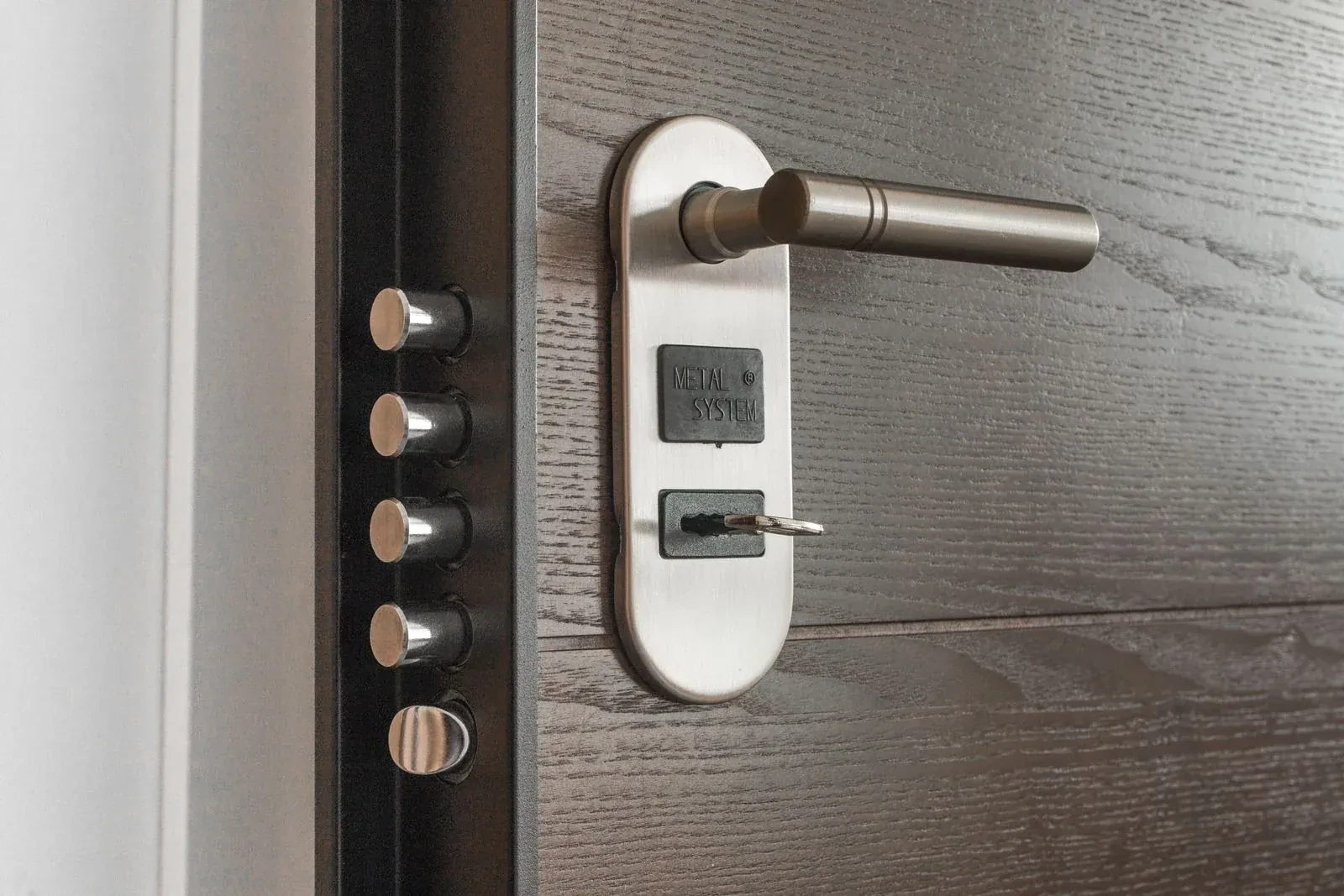
The business is left with hardware sized to how the door is actually used: a mortise lock body or heavy cylindrical lockset that can take the traffic of a busy entrance, or a narrow-stile lock built for the aluminum frame it is mounted in rather than adapted to it. Staff can be shown how the new hardware feels different from the old one, whether that is a firmer latch, a smoother deadbolt throw, or a different key profile, so nobody is caught off guard by hardware that behaves differently from what they are used to.
Commercial-Grade Lock Replacement
In the van
Listed panic or exit hardware
Key-control log and tags
Hookbolt and deadlatch hardware
Electric strike
Key cutting and coding machine
Commercial-Grade Lock Replacement
What affects the quote
Site access and building type
A ground-floor storefront is the simplest case to reach and work on. A unit inside a larger building with its own access rules, or a site requiring coordination with building management, can add steps the quote takes into account.
Number of keys cut and issued
Keys are counted individually into the quote. A small office needing a handful of keys is a smaller line item than a multi-shift operation issuing keys to a large staff roster.
Electrified hardware and access-control integration
An electric strike, maglock or reader tie-in adds parts and testing time beyond a purely mechanical lock, and the quote separates that electrified work from the mechanical hardware so each is clear on its own.
What to have ready
- Has the door recently been forced, damaged, or shown signs of a break-in?
- Is there an electric strike, maglock or card reader already on this door?
- Do you have a record of the current keying or key-control log?
Commercial-Grade Lock Replacement: questions
QuestionsWhat is the difference between a mortise lock and a cylindrical lockset?
A mortise lock has its whole mechanism, latch, deadbolt and sometimes a separate handle function, built into one case that sits inside a pocket cut into the door's edge. A cylindrical lockset is a bored-in unit, simpler to service, common on standard commercial and residential doors alike. Which one your door takes depends on how it was originally prepped, not on preference alone.
How does this service differ from a home lockout or residential rekey?
A home lockout or residential rekey is usually about one door and one household's keys. Commercial-grade lock replacement more often involves a system, several doors, a master key structure, and sometimes a fire or exit rule the door has to satisfy, so the assessment, the hardware selected and the record kept at the end are all built around managing that wider structure rather than a single lock.
How long does commercial-grade lock hardware typically last under heavy use?
It depends heavily on cycle count and how the door is treated day to day, but hardware graded for commercial duty is built to outlast the internal wear that sinks a residential lock on the same door. A delivery door opened hundreds of times a shift will still wear its hardware faster than a quiet office entrance, so grade and use should be matched from the start rather than assumed.
Related services
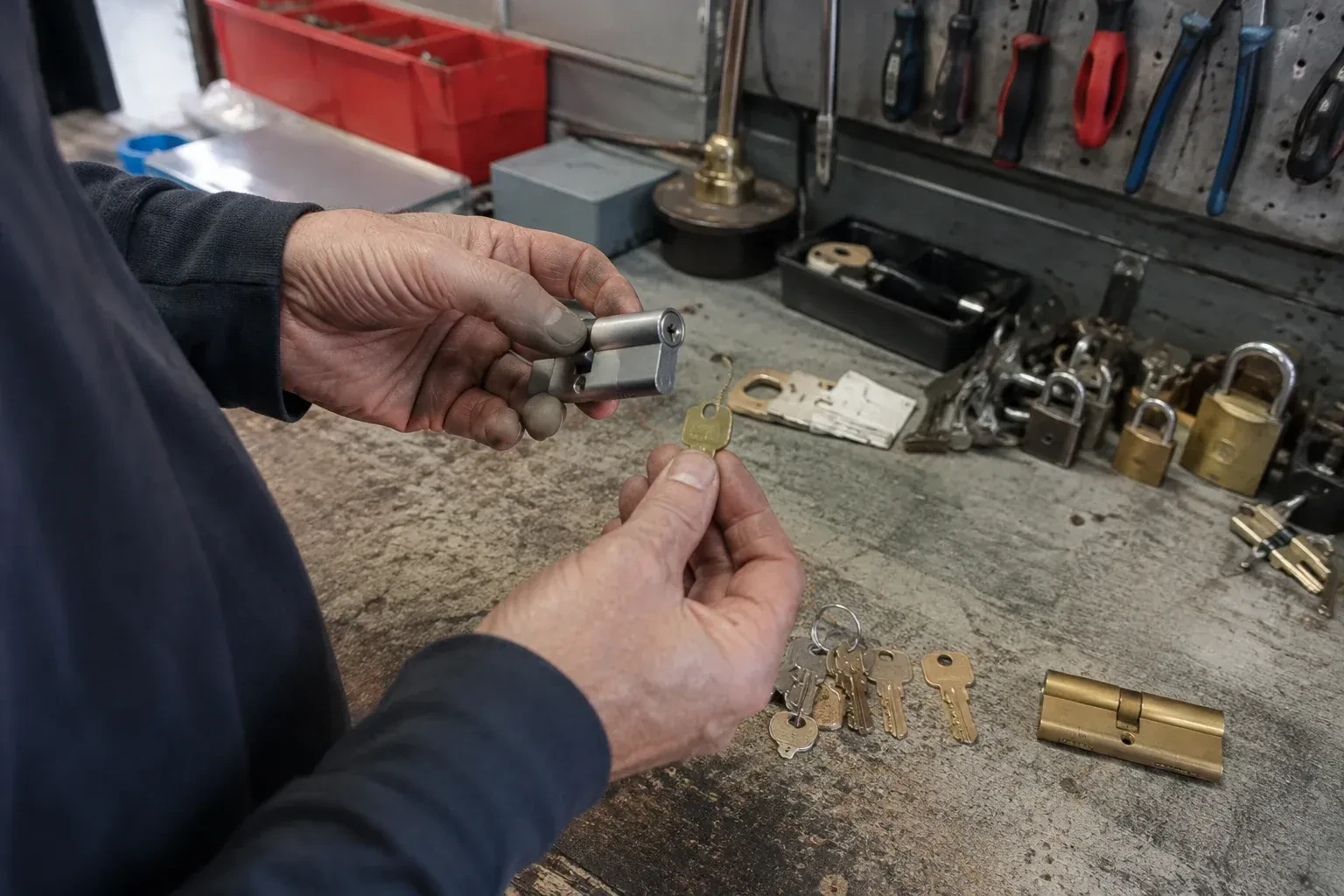
- Master Key System DesignA property manager taking over a small commercial building inherits a shoebox of keys with no labels and no chart.
- Access Control InstallationSomething went missing from the storeroom over a weekend, and when you ask who was in the building, the honest answer is anyone with a key.
- Panic & Exit HardwareA padlock went on the stockroom's back door years ago for security and nobody has thought about it since, until the walkthrough this week pointed out that the same door is the room's only other way out.