Lockouts · Aurora
Home Lockout Service
The keypad on the smart lock blinks once and goes dark.
In plain words
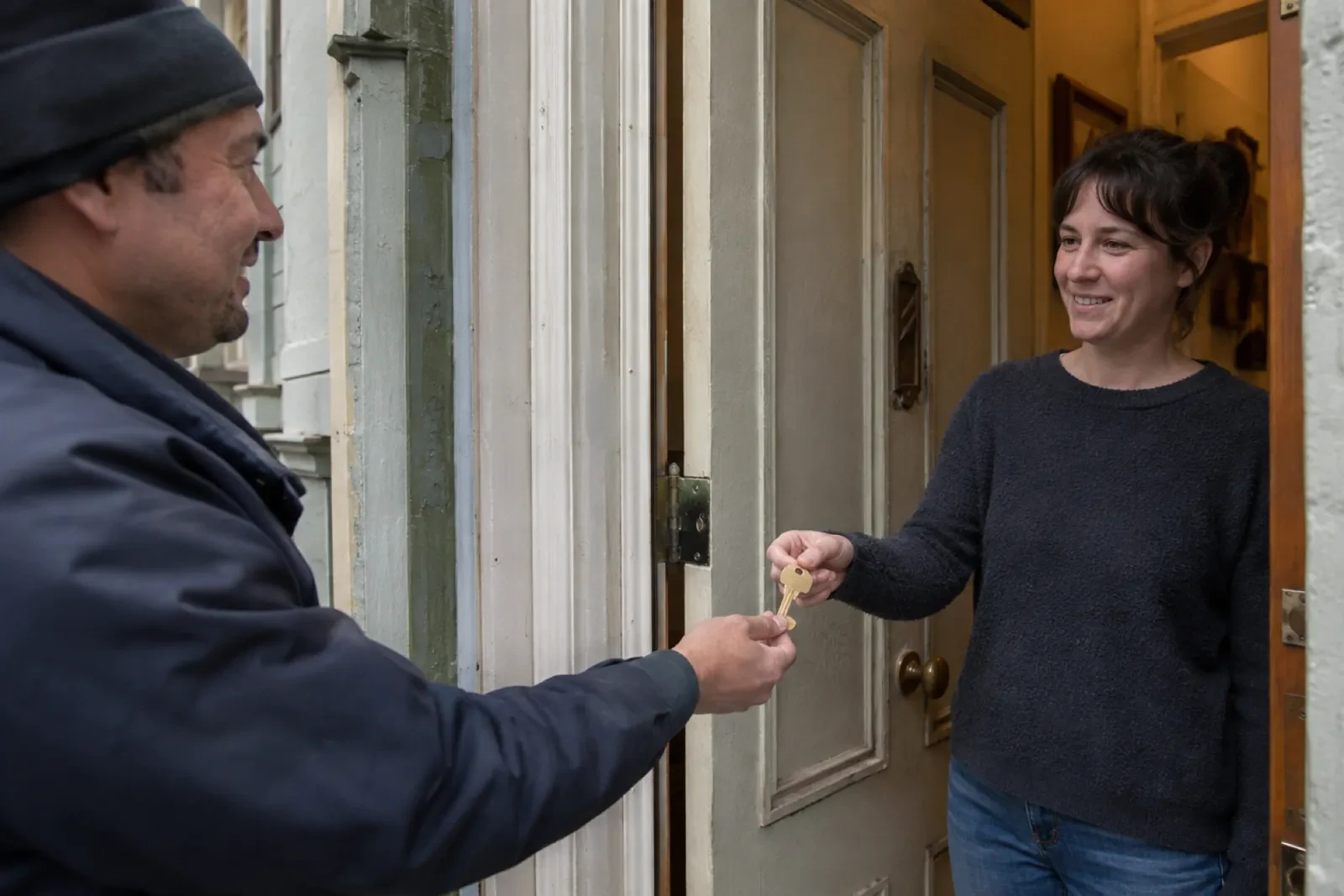
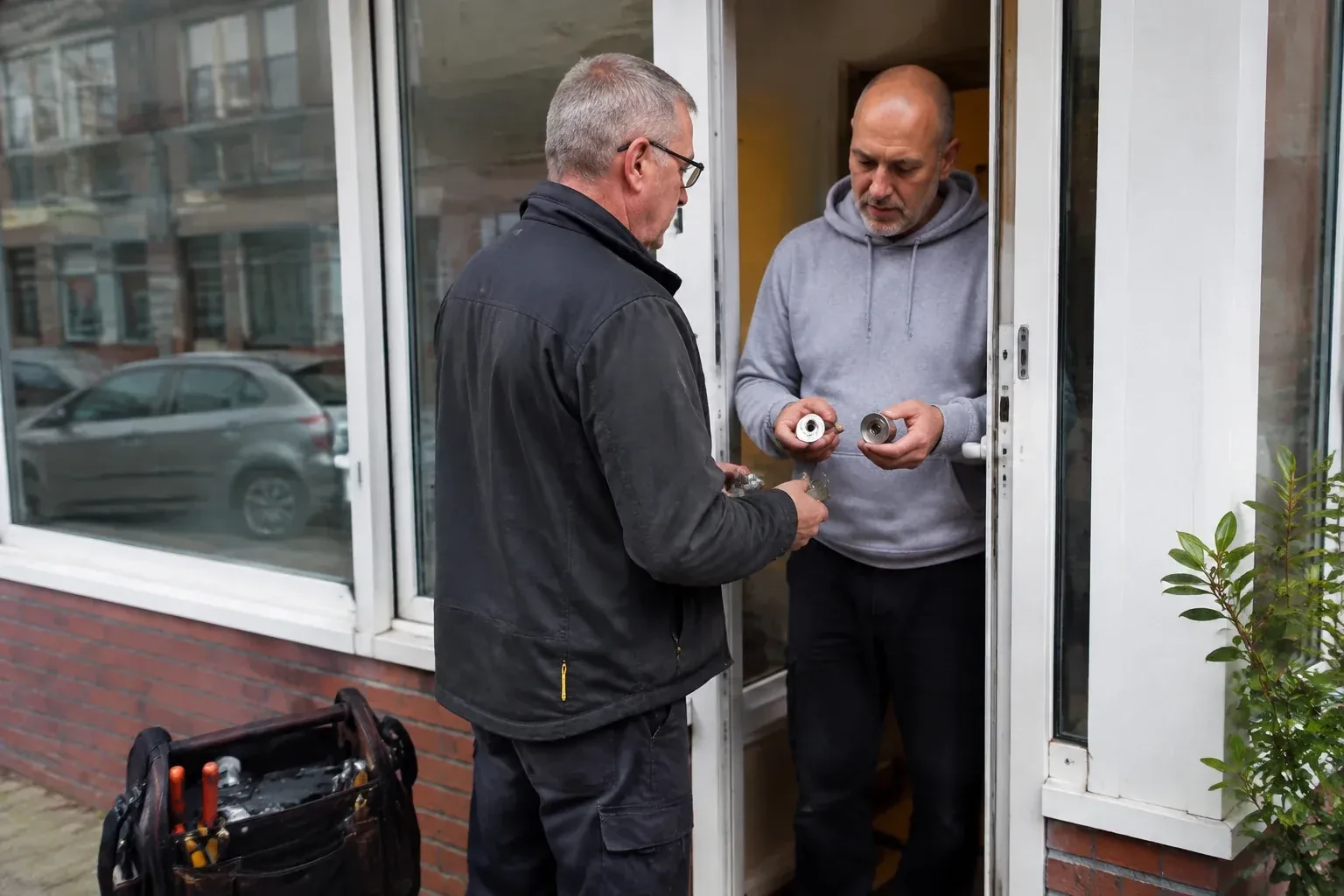
If you rent, a lockout visit works much the same way, with a little extra care around who holds which keys. You show identification and something tying you to the unit, such as a lease or a piece of mail, and the locksmith opens your door. Because a landlord and tenant each have rules about changing locks, the locksmith will talk through any rekeying or replacement rather than assume it, and can leave a note of what was done for the building manager. In a condo or apartment, the entry door, the mailbox and a storage locker may all come up in the same visit.
How the visit goesYou stepped out to grab the recycling bin and the door swung shut behind you. Through the glass you can see your keys hanging on the hook by the stairs, exactly where they always are, and the latch has caught.
Home Lockout Service
How the visit goes
Where the key went
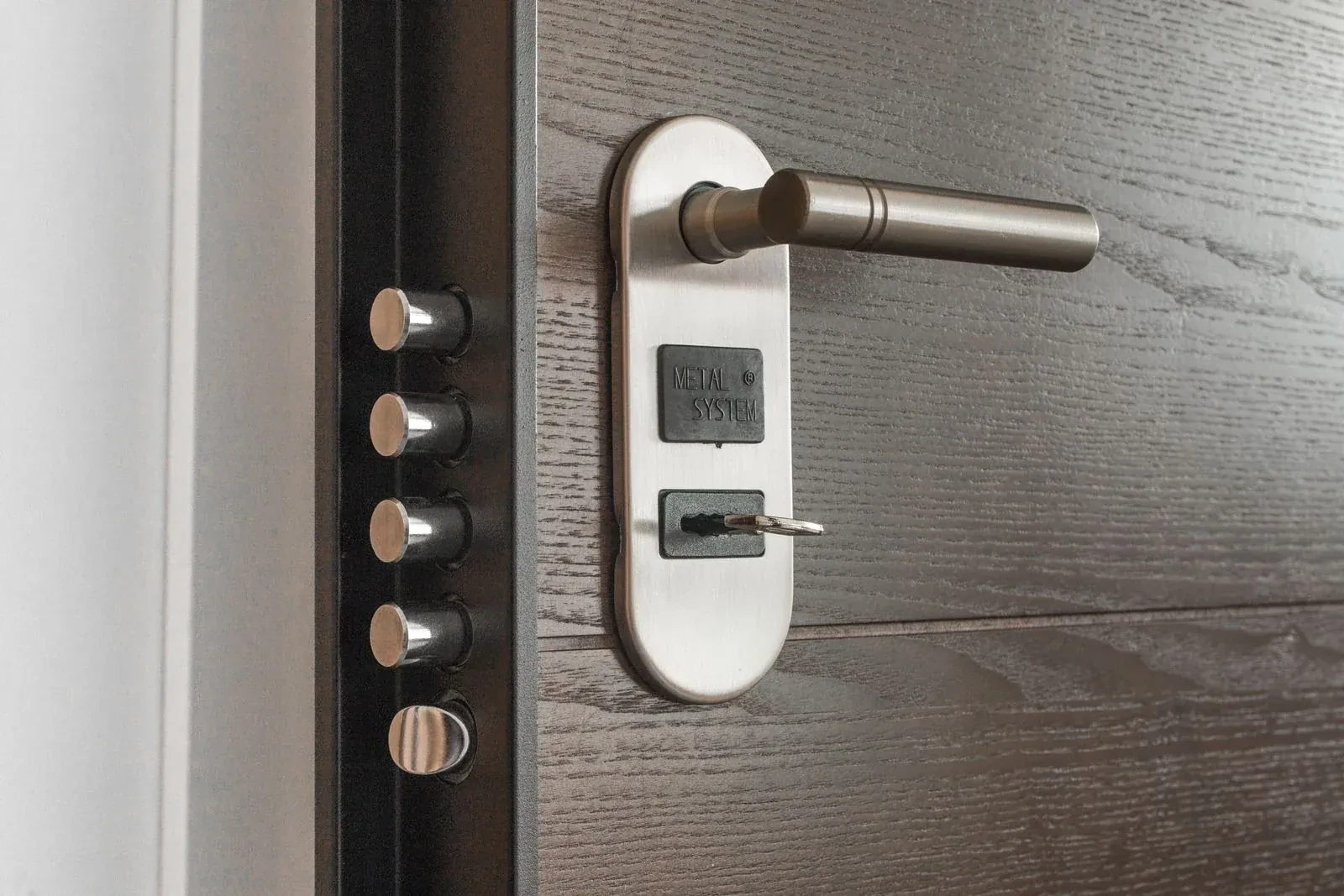
The next question is about the key rather than the lock. A key left on the hall table means the lock is healthy and only the door needs opening. A key lost on a bus, dropped in a parking lot or taken with a stolen bag means a stranger could be holding it, which changes the advice given after entry. A key that turns without moving anything points to wear inside the cylinder or a broken tailpiece, and a key that snapped calls for extraction before anything else. Ten seconds of honest history about the key saves guesswork and shapes the whole visit.
Freeing a frozen cylinder
Ice is handled with patience rather than force. The locksmith applies a lock de-icer or warms the cylinder face gently so the meltwater inside turns back to liquid and drains, then works the key or a pick in small movements until the plug turns freely. Hot water is never poured on the lock, because it refreezes in the keyway and can crack a cold cylinder. Once open, the cylinder is dried and given the lubricant that model's maker approves, a dry graphite, PTFE or specified liquid product, applied sparingly since too much can gum the mechanism. If the door itself had frozen to its weatherstripping, that seal is cleared and checked too.
Looking after the cylinder afterwards
A lock that has just been opened deserves a little care so it keeps turning sweetly. Twice a year, follow your lock's own maintenance guidance: many residential cylinders take a puff of dry graphite or PTFE lubricant into the keyway, some a specified liquid product instead; general-purpose oil sprays attract dust and gum the pins. Wipe grit off your keys before using them, and retire a key that has worn thin or bent, cutting a new one from the code or from a crisp original rather than from a tired copy. If the key starts to need a wiggle to turn, that is the cylinder asking for attention early, while it is still an easy fix rather than a lockout.
Home Lockout Service
In the van
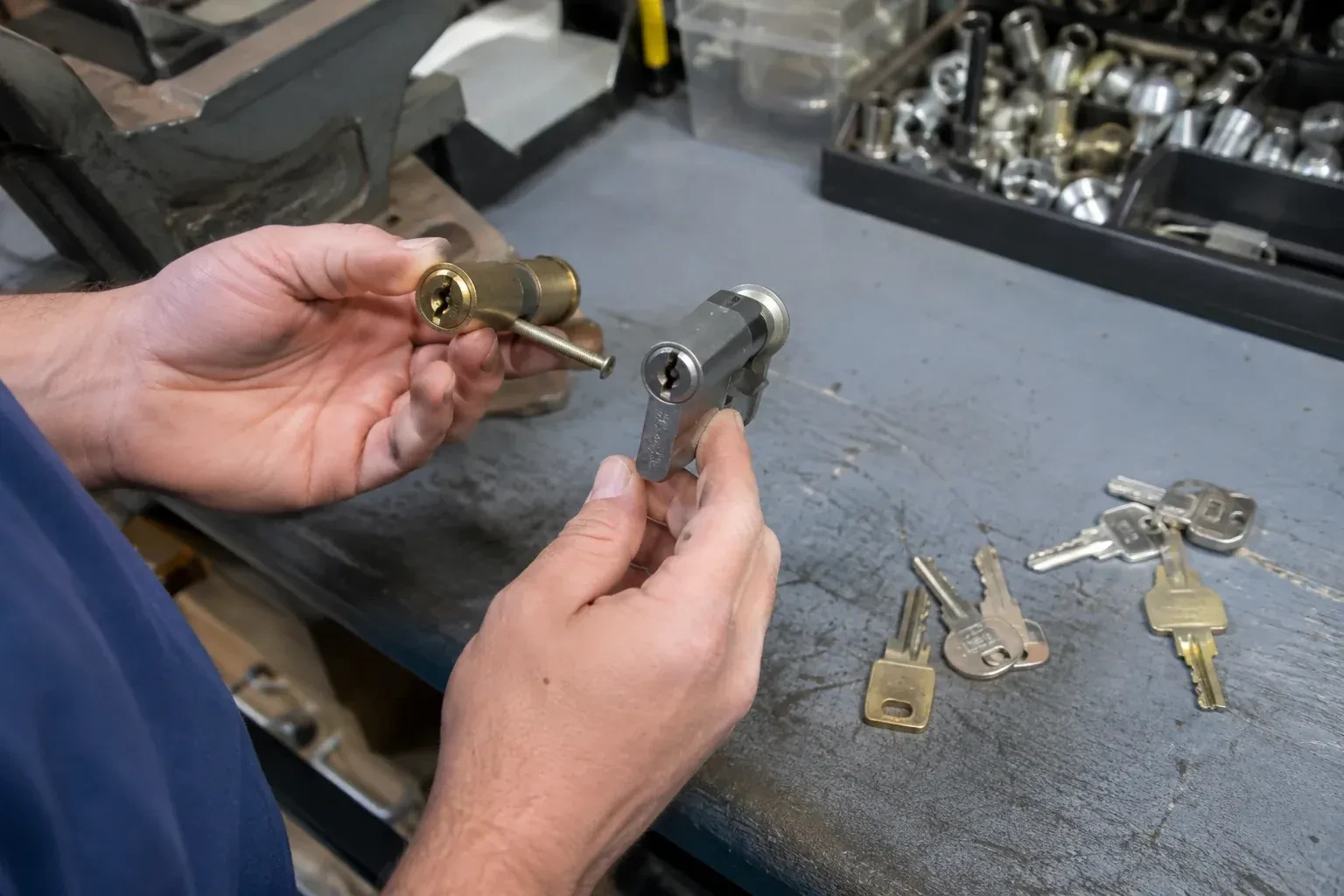
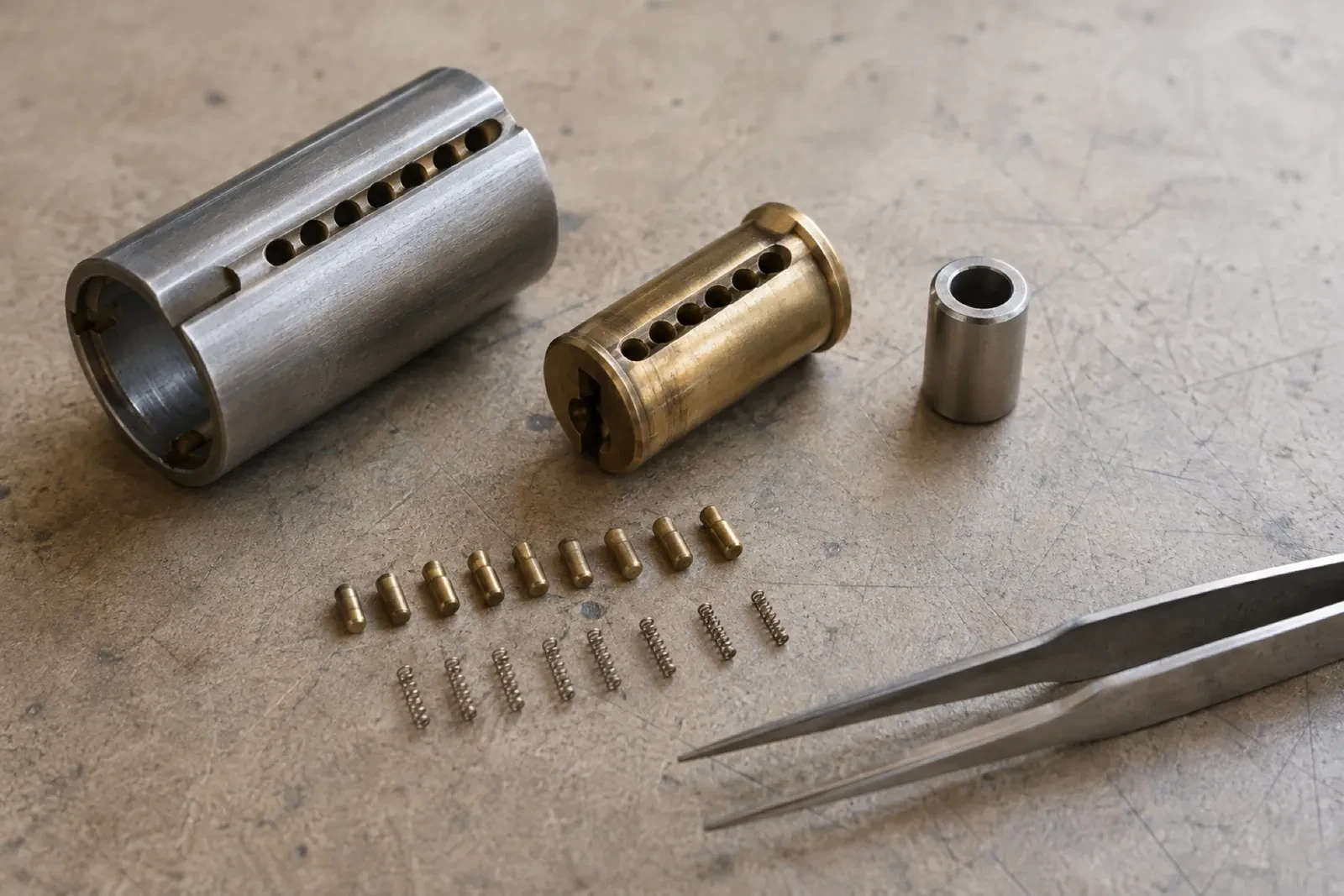
Plug follower and repinning kit
Key blanks and key cutter
Dry graphite or PTFE lubricant
Pick and tension tools
Broken key extractors
Home Lockout Service
What affects the quote
Keying other doors to match
Bringing the back door, side door and garage onto the new key after a rekey is extra work per cylinder, and simplest to arrange during the same call-out.
Number of new keys cut
Keys cut on site are counted into the quote individually. Two for a couple, five for a family with teenagers and a dog walker: say how many you want and the total follows.
Getting to the door
A ground-floor house door is straightforward. A unit up several flights, a building with a locked lobby and no concierge, or a gated property where the gate is also locked adds steps that the quote takes into account.
What to have ready
- Is there a second door, a garage entry or a spare key nearby you could use?
- Is the door swollen, sagging or hard to close even when it is unlocked?
- Does the same key open other doors on the property?
Home Lockout Service: questions
QuestionsCan a frozen lock be opened, and how do I stop it freezing again?
Frozen cylinders open well with patience: lock de-icer or gentle warming melts the ice so the plug turns, and the cylinder is then dried and treated with a dry lubricant that sheds moisture. Hot water is avoided because it refreezes and can crack cold metal. To prevent a repeat, keep a storm door closed over the main lock, fit a keyhole cover on exposed side doors, and carry a small de-icer in your coat or car through the freeze-thaw months.
Can you get me in if my smart lock has died?
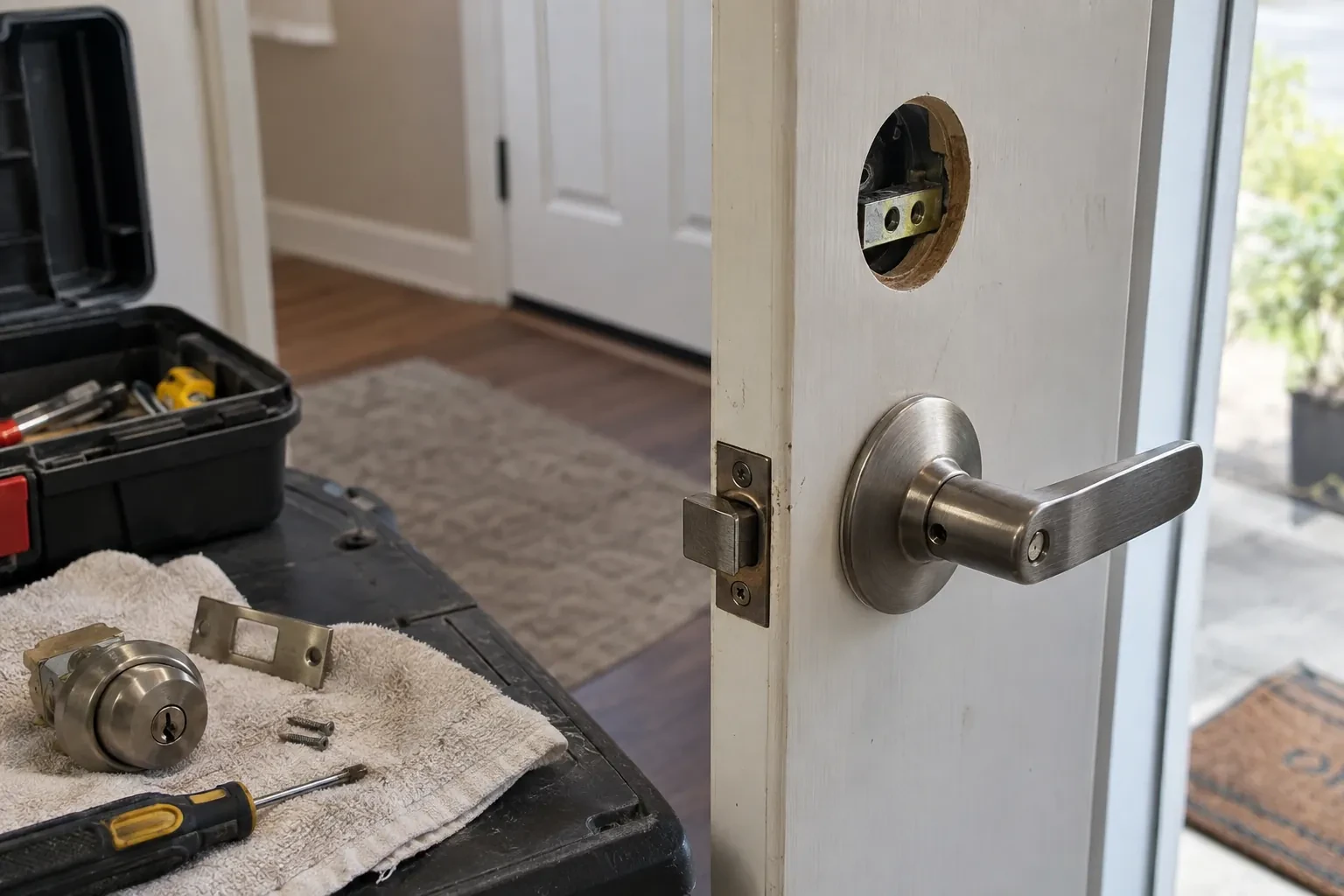
Yes, usually. Backup access on a keypad or app-controlled deadbolt depends on the model. Many carry small external terminals that wake the lock when a fresh nine-volt battery is touched to them, long enough to enter your code; some also keep a conventional keyed override behind a cover, which a locksmith can pick or decode like any other cylinder, while other current models have no cylinder at all and rely only on their own recovery method. Once inside, the batteries are replaced and your codes are checked.
How long does a home lockout usually take once the locksmith arrives?
The opening itself is often the shortest part of the visit; verifying identification, examining the lock and testing the door afterwards take a share of the time too. A standard knob or deadbolt on a well-fitting door is generally a matter of minutes, while a high-security cylinder, a frozen lock or a swollen door takes longer. If a cylinder has to be drilled and replaced, or locks are rekeyed while the locksmith is there, allow extra time for that work.