Lockouts · Aurora
Business Lockout Service
A cook stepped into the alley with the recycling and the rear door swung shut behind him.
In plain words
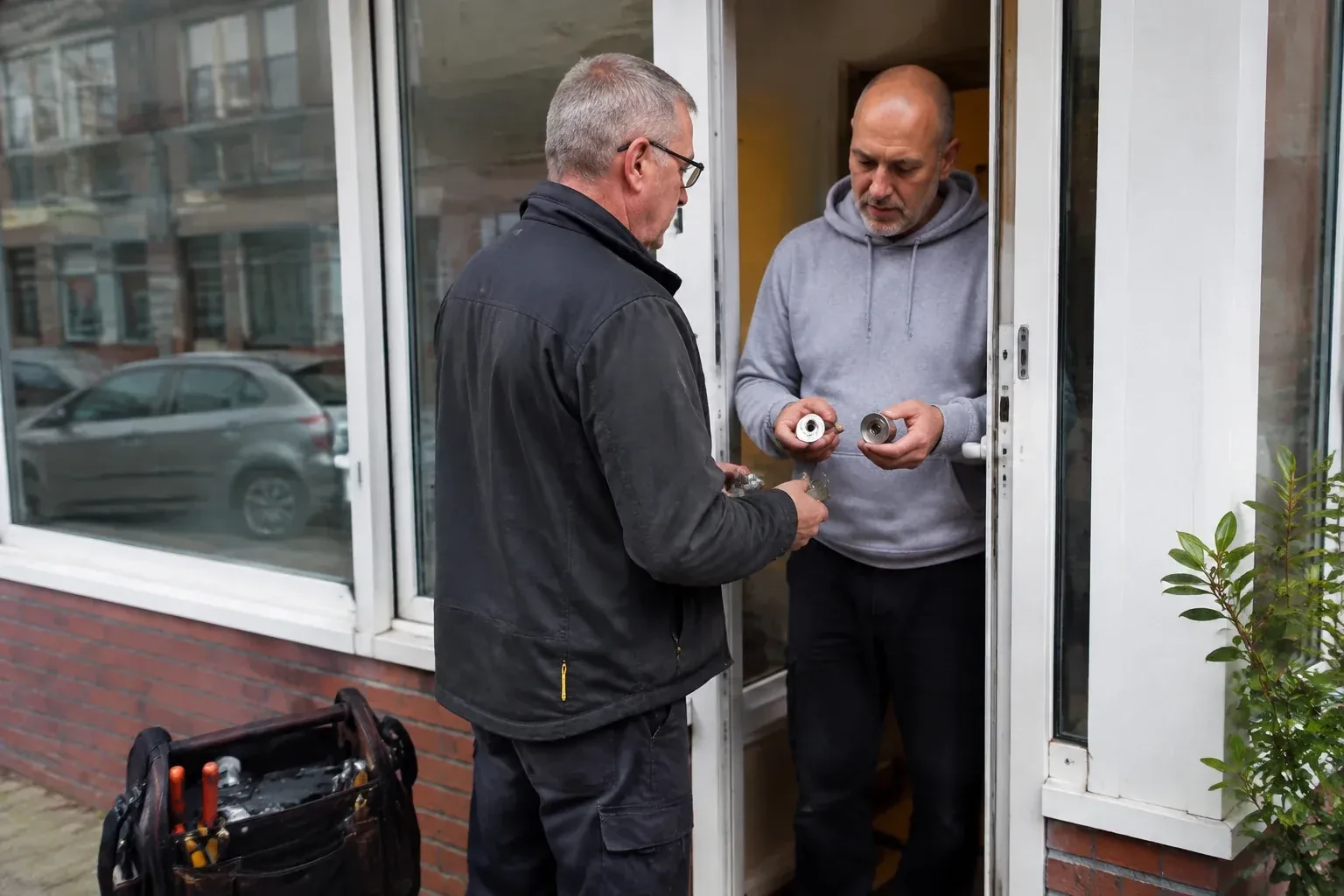
Authority for a business is a question about the company, not just the individual at the door. An owner shows identification and something connecting them to the premises, such as the lease or the business registration. A manager or employee adds a call to the owner or head office, or a property manager who can vouch for them. A commercial landlord brings the lease terms or written instruction that supports the request. Good locksmiths treat this as the opening step of every business lockout and help find the right document rather than guessing, because the same care protects the business the next time a stranger claims to work there.
How the visit goesThe key went in stiffly, turned a quarter of the way, and came out in two pieces. Half of it is still inside the cylinder of the aluminium storefront door, and the deadbolt is hooked firmly into the frame.
Business Lockout Service
How the visit goes
The building around the unit
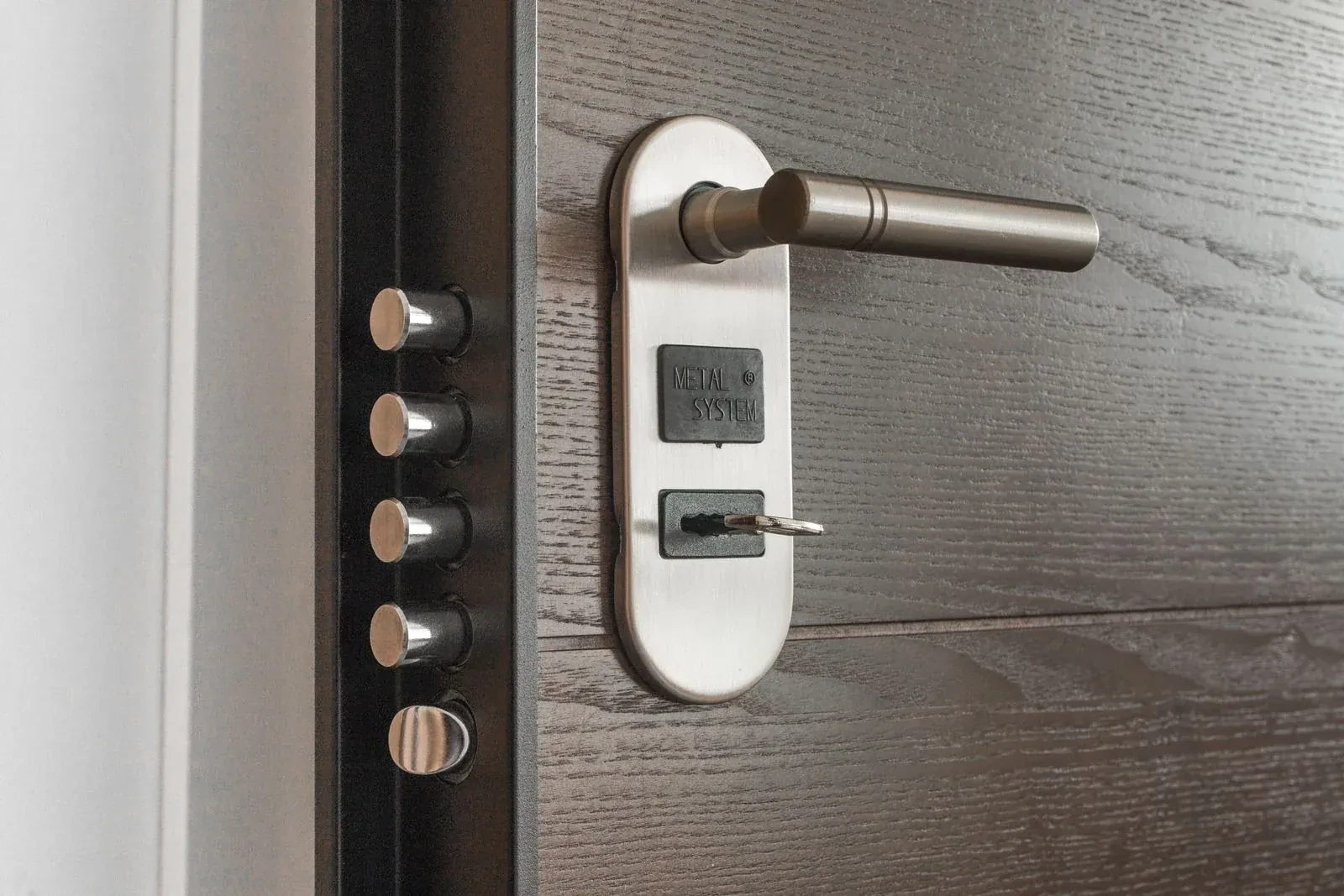
A unit inside a plaza, office tower or industrial condominium comes with rules of its own. The locksmith asks whether the door is master keyed to a building system, because rekeying one cylinder without the property manager's knowledge can lock out cleaning and maintenance staff. A labelled fire door needs hardware that keeps its rating. A door on the exit route must keep releasing from inside with one motion, which rules out some replacements before they are suggested. Loading docks, freight elevators and after-hours building access are confirmed so the locksmith can actually reach the door with tools. A short call to the property manager often answers all of this at once.
Extracting a snapped key and finding out why
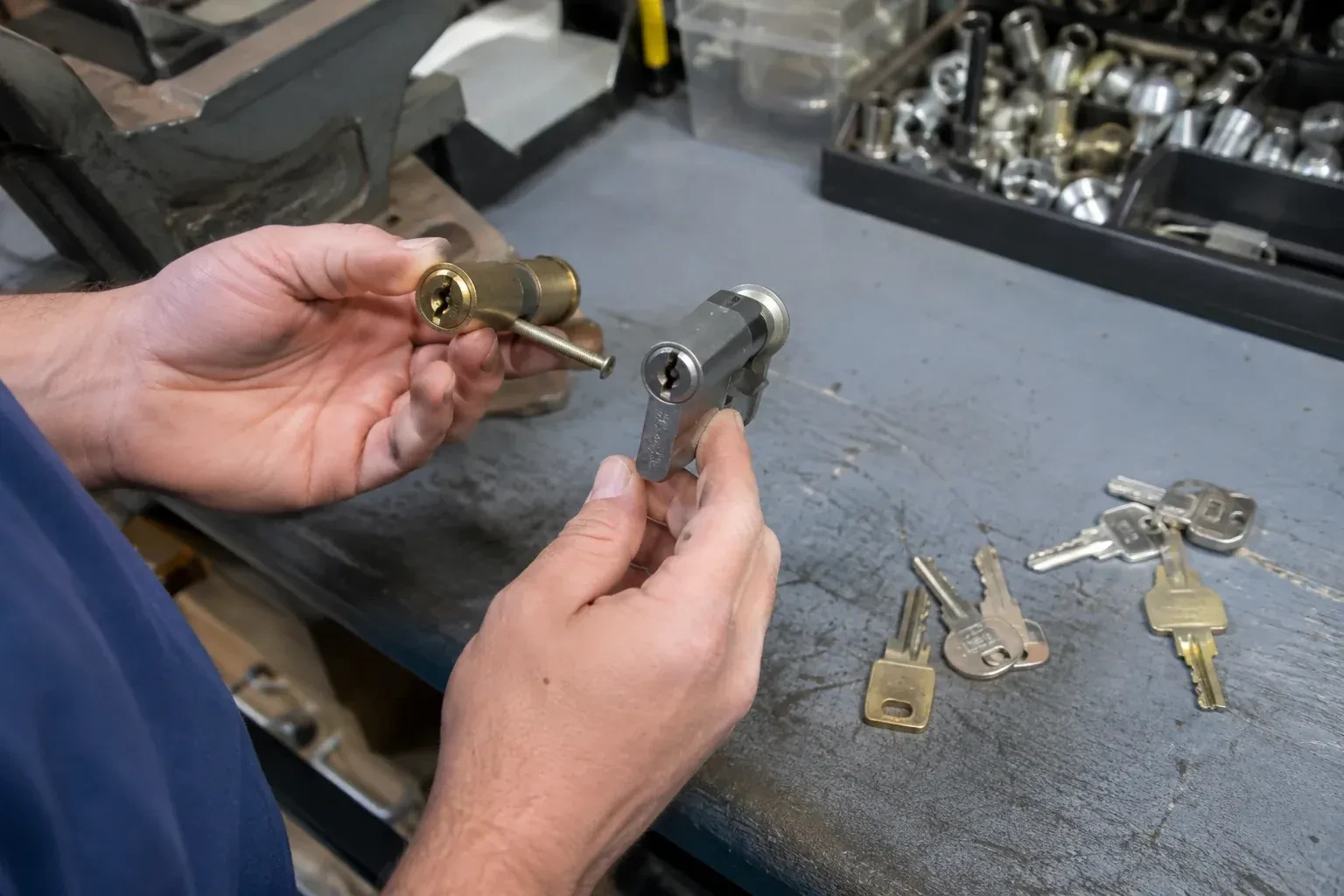
A key that broke off in a commercial cylinder is drawn out with extractor tools that grip the blade and pull it toward the face, never pushing it deeper. With the fragment out, the cylinder is picked or decoded and the door opened. The two halves of the key are then compared with a fresh blank, because a key rarely breaks in a healthy lock: a bent or thin copy, a cylinder full of grit, or a stiff cam behind it is usually the cause. The cylinder is cleaned and lubricated with a dry product, the cam checked for wear, and a new key cut from the code or from the pieces rather than from another tired copy.
Exit doors that still let everyone out
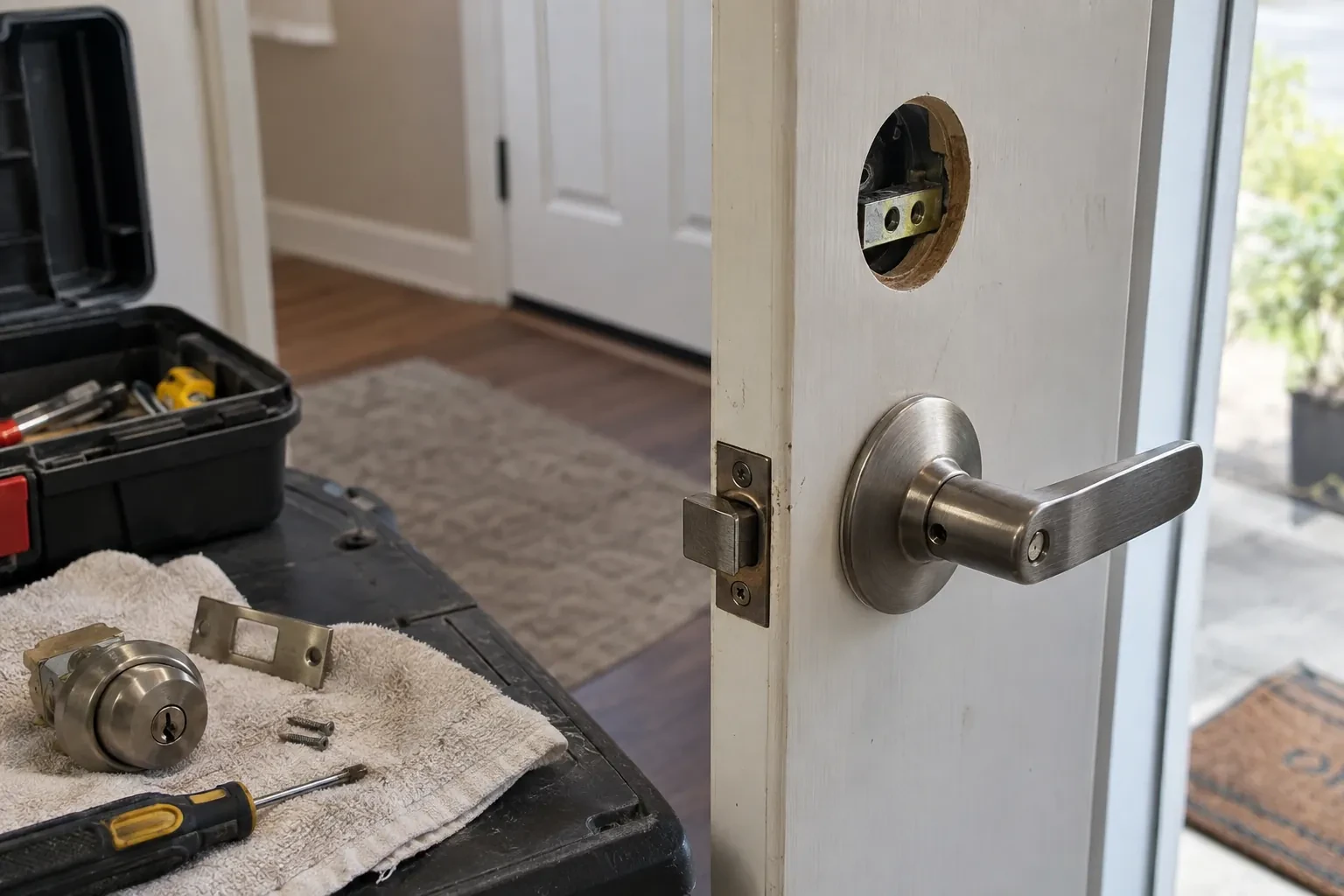
Whatever was replaced, a door on the way out of the building still opens from inside with a single motion and no key while people are in it. That standard is why a storefront gets a thumb-turn or paddle inside, a rear door keeps its push bar, and a double-cylinder deadbolt does not go on an exit route. The locksmith checks each door for this before leaving and points out any older hardware, such as a chain or a keyed-inside bolt on a back door, that the business may want to bring into line.
Business Lockout Service
In the van
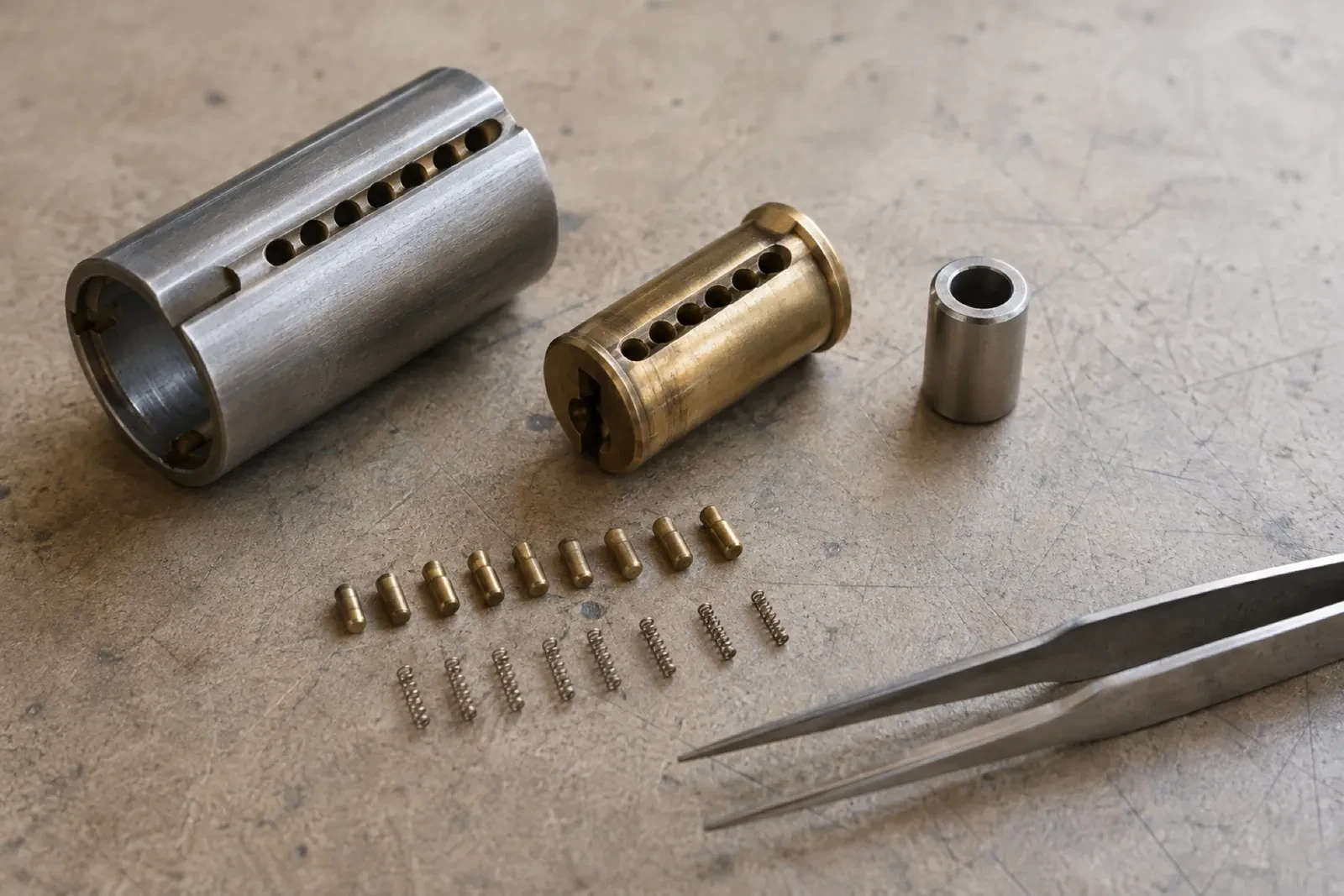
Interchangeable cores pinned to system
Key blanks and code cutter
Cylinder decoder and plug spinner
Commercial pick and tension tools
Replacement mortise and rim cylinders
Business Lockout Service
What affects the quote
Keys cut and recorded
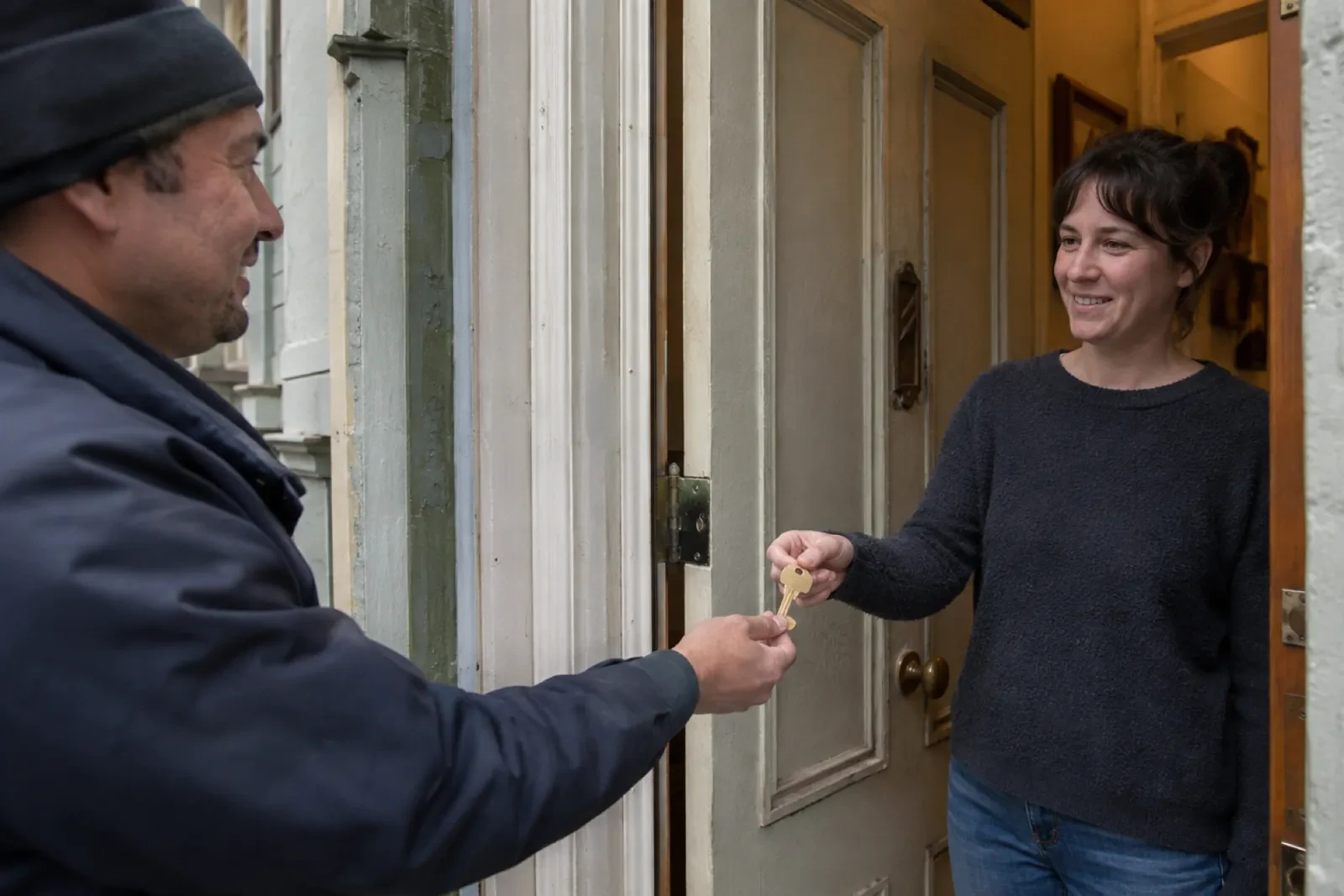
Each new key is cut and counted individually. Two for the owners and four for the opening staff is a different line from one spare, and restricted blanks are priced above ordinary ones.
Drilling and a replacement cylinder
If a seized or blocked cylinder has to be drilled, the quote gains a new commercial cylinder or core and the labour to fit and key it. This is explained before the drill comes out.
Door, pivot and closer adjustment
When the lockout was really a dropped door or a tired closer, lifting the door, adjusting pivots or a continuous hinge, moving the strike and resetting the closer are quoted as their own item beside the opening.
What to have ready
- Who on site can show identification and a document connecting them to the business?
- Has a key gone missing or left with a former employee, so that rekeying should follow?
- Does the door use a card reader, keypad or intercom, and is it showing any lights?
Business Lockout Service: questions
QuestionsOur alarm is armed. What happens when you open the door?
The opening is planned around it. Before any work, the person with the alarm code is ready to disarm, and where a monitoring company is involved they can be told to expect an entry at that address. If the contact trips anyway, the authorised person speaks to the station with the account password. Nothing about the alarm is bypassed; the door is opened, the system is disarmed normally, and the event is logged like any other.
How long does a business lockout take?
It depends on the hardware and what else is wired to it. A standard storefront cylinder or office lever on a well-hung door is often a short job once authority is confirmed. A high-security cylinder, a frozen lock, a dropped door or a dead access controller adds time, and so does rekeying several doors afterwards. The locksmith gives you a realistic idea on the phone once you describe the door and the situation.
An employee left and never returned their keys. Should we rekey?
It is the sensible step, and a lockout visit is a convenient moment for it. Rekeying keeps your existing cylinders and changes the pins so a new key operates them and the unreturned one does nothing. If your doors use interchangeable cores, swapping the core takes minutes. Bring every door that shared the old key onto the new one, count the fresh keys into named hands and start a register so the next departure is a line in a book rather than a call.