High security · Aurora
High Security Locks in Aurora
The pharmacy stockroom, the server closet or the cash office is protected by the same ordinary cylinder as the staff washroom.
In plain words
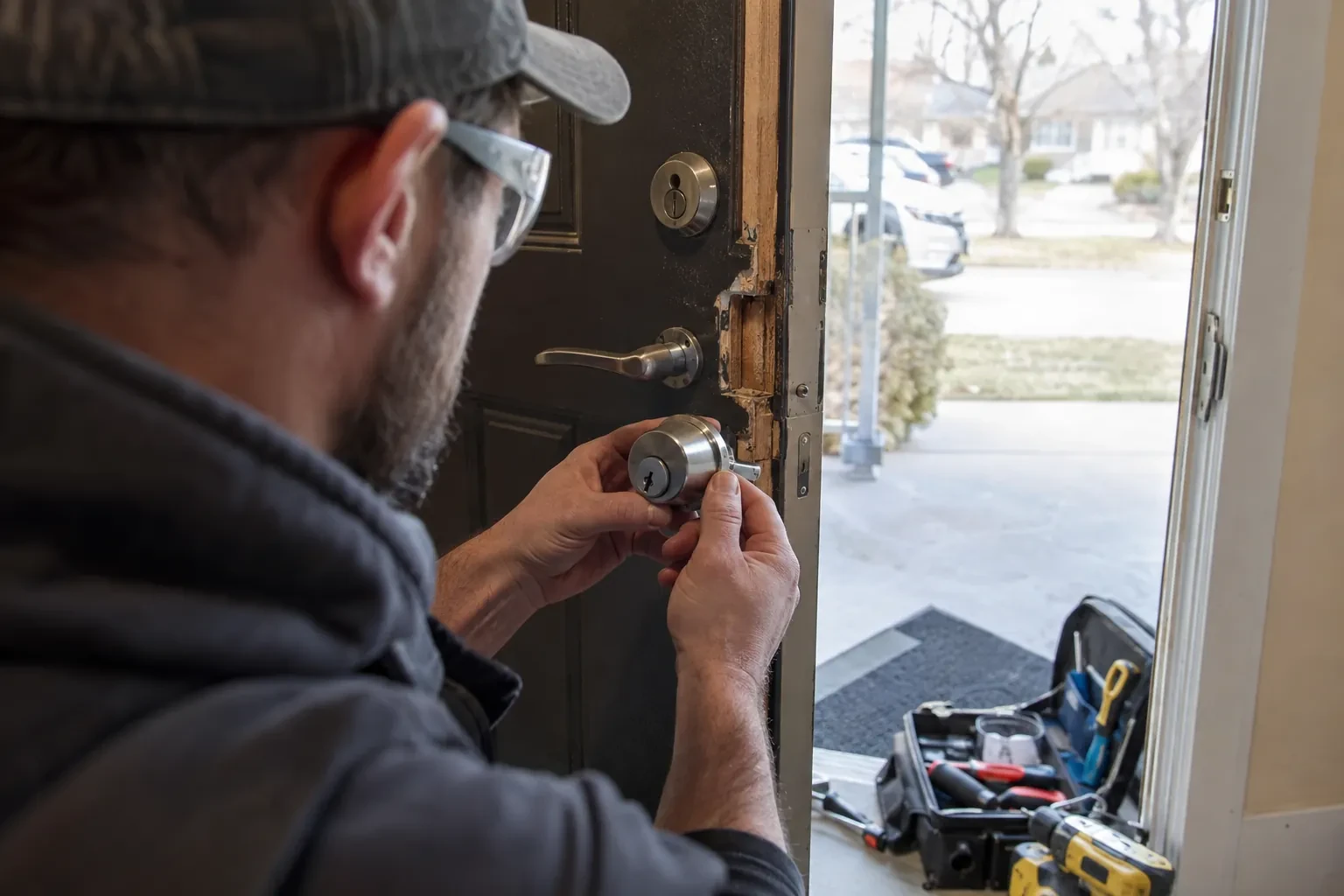
A high security cylinder is rated by independent laboratory testing that times how long it holds out against picking, impressioning, drilling, prying and wrenching. The lock body and deadbolt carry a separate hardware grade for strength, cycle life and finish. A locksmith reads those ratings for you and matches them to your door, because a rating on the box means nothing if the door frame is thin or the bolt barely enters the jamb. The visit usually ends with a heavier deadbolt, a reinforced strike fastened into the framing and a cylinder whose keys cannot be copied at a kiosk.
How the visit goesYou run a home office with client files and equipment, and your insurer has asked what kind of lock is on the door. The honest answer is the builder's knob lock and a light deadbolt from when the house was new.
High Security Locks
How the visit goes
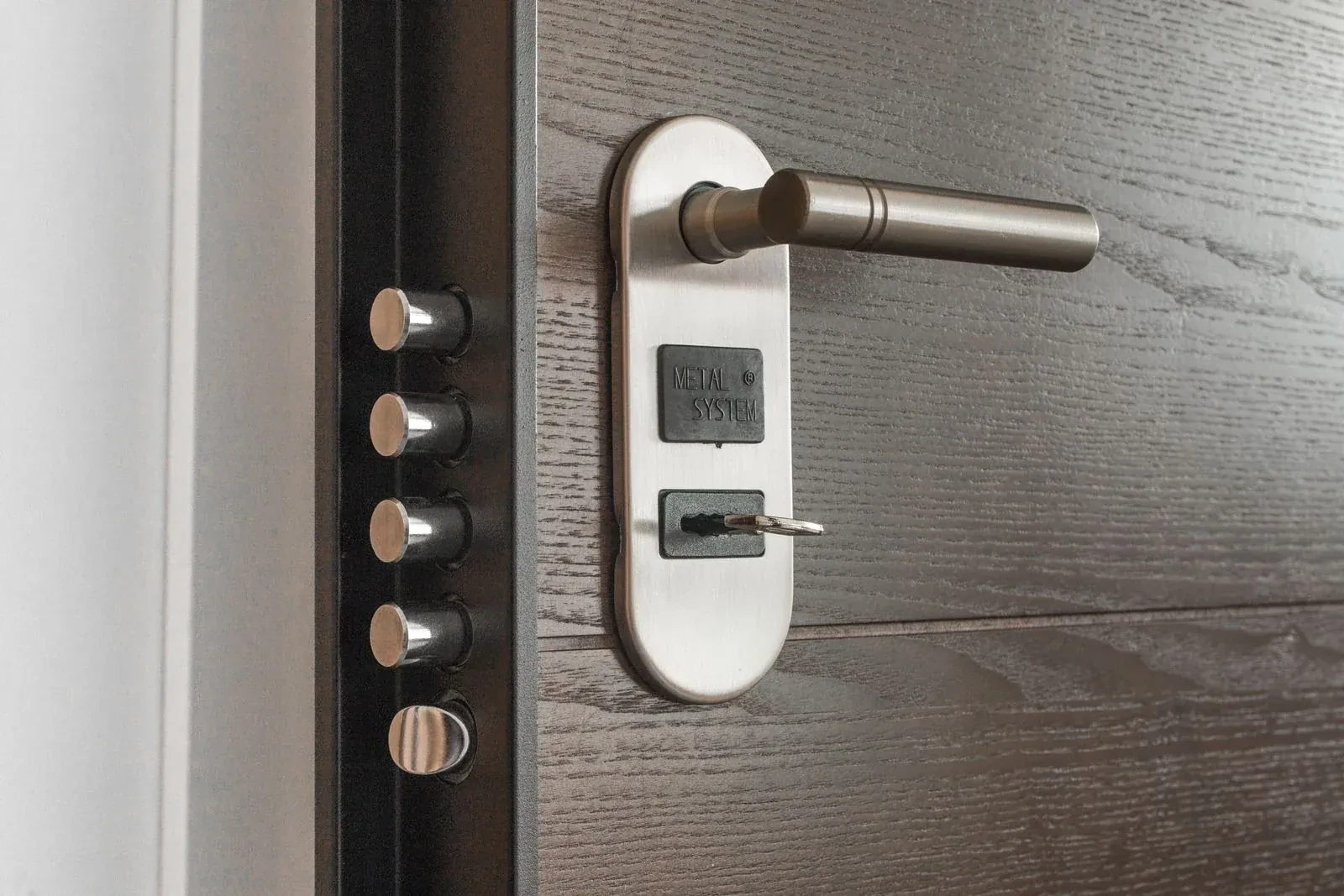
Reading the cylinder you have now
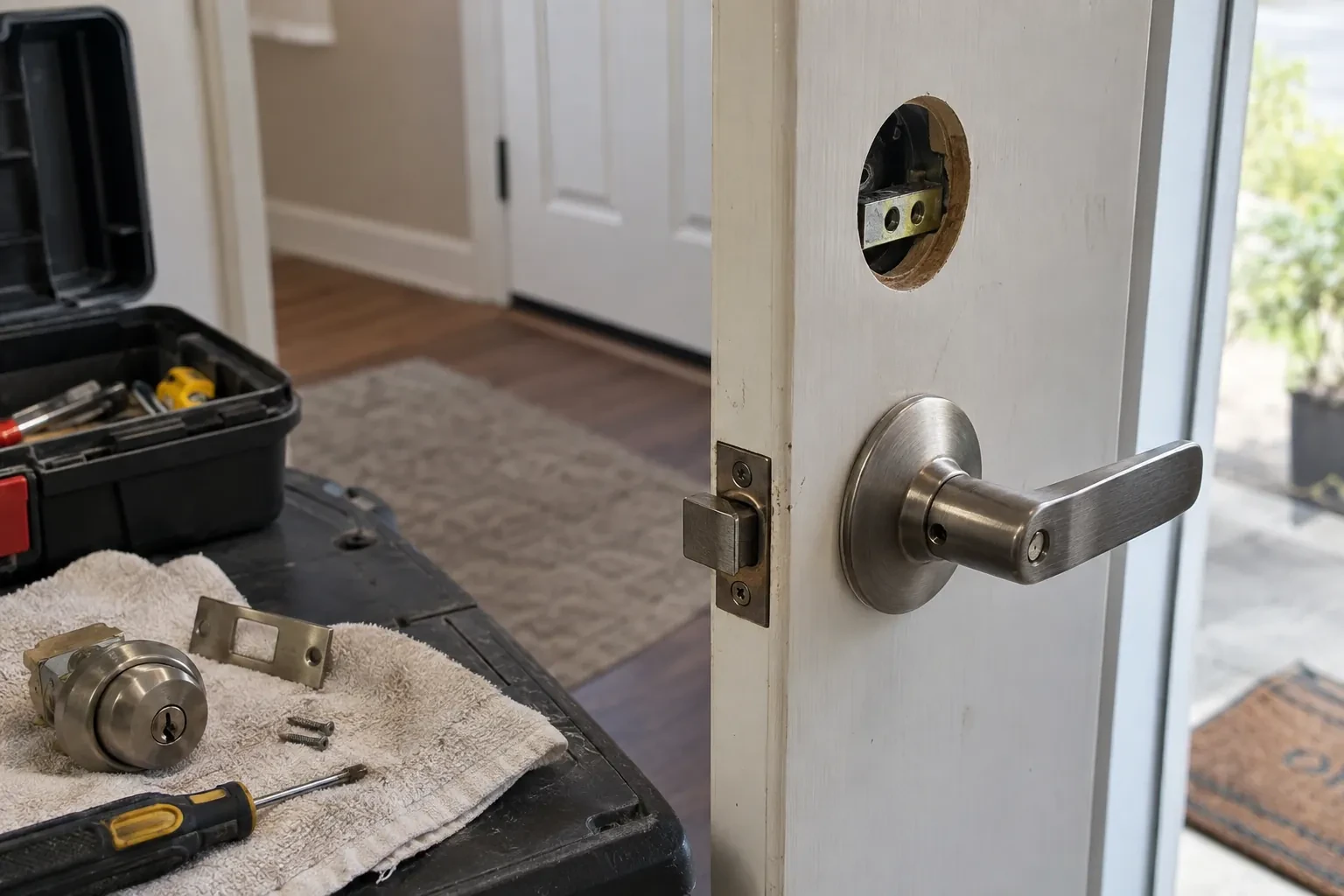
The existing cylinder tells the locksmith a great deal. A standard pin tumbler with an open keyway can be picked, bumped and duplicated by anyone with the blank. Worn pins let a key that is not quite right jiggle it open. A cylinder that spins loosely in its housing or shows a scratched face has been attacked or simply worn out. The locksmith identifies the format, whether key-in-knob, rim, mortise or interchangeable core, because that determines which high-security cylinders will drop into your present hardware and which will need a new lock body altogether.
Setting up controlled keys
The key system is registered to you before the first key is cut. The locksmith records the system, the authorised signatories and the number of keys issued, and hands you the authorisation card or online validation details. Every key is cut from code rather than copied, because the angled cuts or side milling must be exact for the sidebar to release. Extra keys later are ordered by an authorised person and logged, and blanks are not sold outside the manufacturer's network. This is what makes a key stop being a thing anyone can duplicate at a kiosk.
Looking after a precision cylinder
High-security cylinders are finer mechanisms than the pin tumblers they replace, and a little care keeps them turning sweetly. Use only the dry lubricant the locksmith recommends, once or twice a year and sparingly, and never household oil, which gathers grit around the finger pins and sidebar. In cold weather, if the key resists, warm it in your hand or use a de-icer rather than forcing it. Insert the key fully before turning. Keep a spare key indoors so a bent or worn key is retired rather than pushed on. Treated this way, the cylinder outlasts the door around it.
High Security Locks
In the van
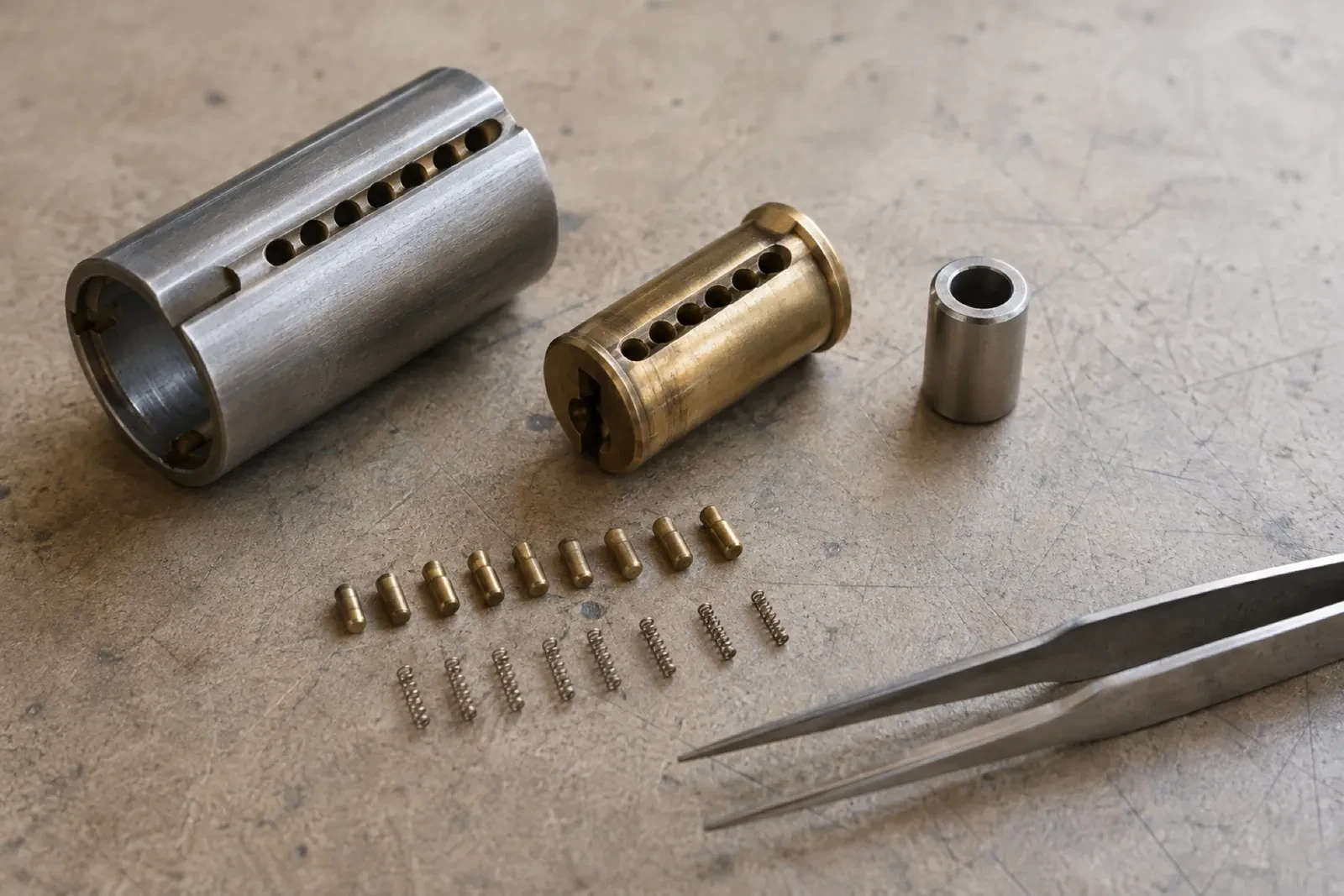
Pinning kit and plug follower
Commercial mortise lock body
Patented key blanks
High-security cylinder
Box strike
High Security Locks
What affects the quote
Strike and frame reinforcement
A reinforced strike with long screws is modest work on a healthy frame. Deepening the pocket, filling split wood, fitting a jamb plate or a wrap-around reinforcer adds materials and time.
Number of keys cut
Every key is cut from code on a machine that handles side bitting or angled cuts, so the count of keys you want at handover is a real line rather than a rounding error.
Key control level
A patented keyway with authorisation cards covers most homes. Geographically exclusive keyways and signature-controlled systems for businesses carry registration and administration that show in the quote.
What to have ready
- How many exterior doors do you want included?
- What does the door protect, and what prompted you to think about upgrading now?
- Is there a window or sidelight within reach of the lock?
High Security Locks: questions
QuestionsWhat actually makes a lock high security?
Three things working together. The cylinder has a second locking mechanism, usually a sidebar released by finger pins or rotating pins, plus hardened steel in the path of a drill, so picking, bumping and drilling take far longer than on an ordinary lock. The deadbolt and strike are heavier and fastened into the framing. And the key is cut on a patented or restricted blank that only an authorised person can have copied. Remove any one and the door is weaker than the label suggests.
Are high security locks only for businesses?
Not at all. Homes are the most common place they are fitted, especially after a move, a break-in nearby, or the realisation that too many keys have been handed out over the years. A graded deadbolt with a patented cylinder and a reinforced strike is a modest, quiet upgrade for a front or side door. Businesses tend to go further, with laboratory-rated cylinders, heavy lock bodies and a documented key system across many doors.
Can all my doors be on one key?
Yes, and most homes ask for exactly that. Every exterior cylinder is pinned to the same combination so one controlled key opens the front, back, side and garage entry. A gate or shed padlock on the same keyway can join it. For businesses, the same keyway can carry a small master system where staff keys open only their areas and a manager key opens everything. The keying plan is agreed before any pinning is done.