Lockouts · Aurora
Seized & Jammed Lock Opening
It is the coldest morning of the winter and the key goes halfway into the side door and stops.
In plain words
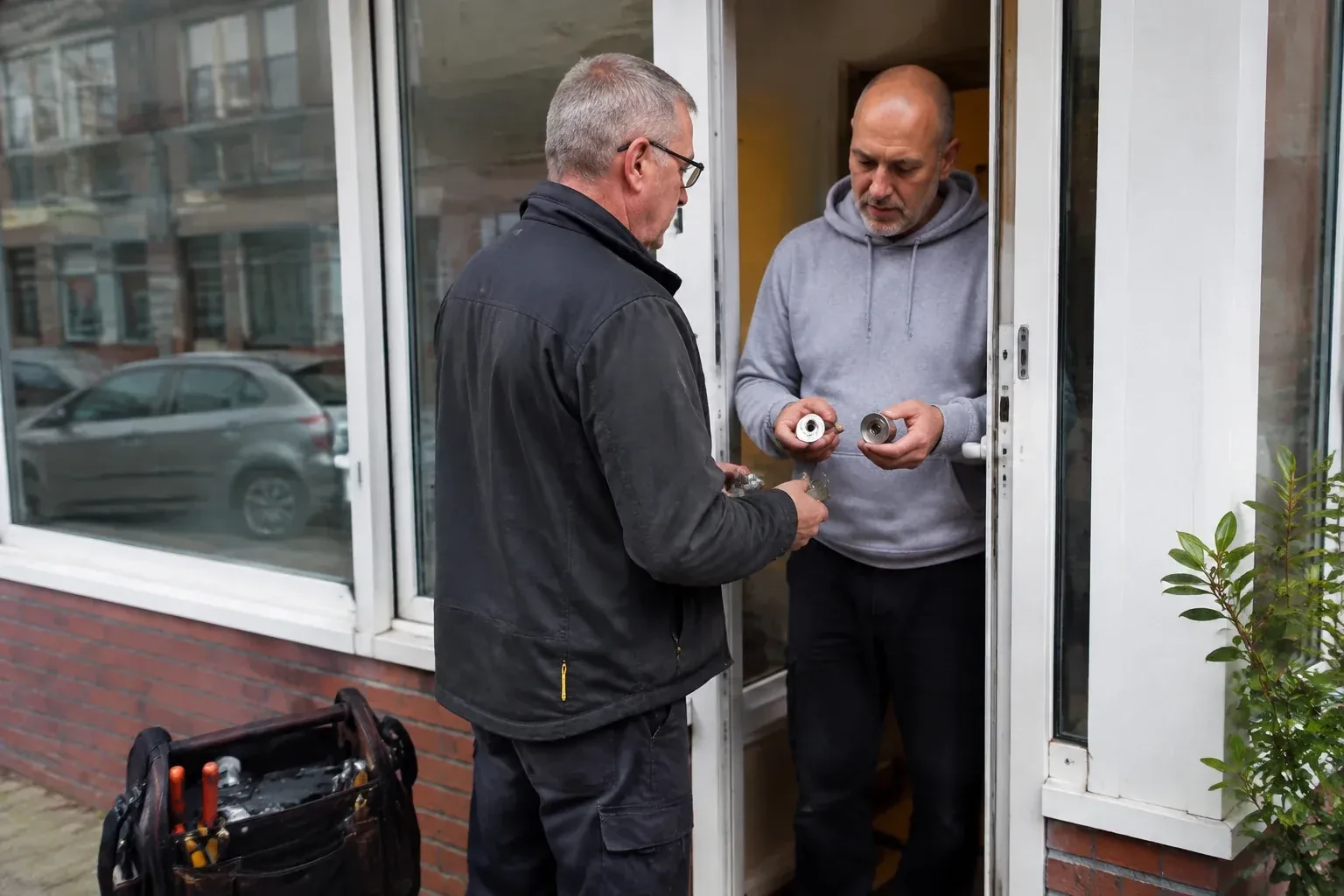
The visit runs in a set order. On the phone you describe what the key does: refuses to turn, spins freely, or works only when the door is pushed. That description tells the locksmith what to bring. At the door, identification and your connection to the property are confirmed. The key, keyway, door fit and strike are examined before anything is forced. The opening uses the least disruptive method the condition allows. Then the failed part is serviced or replaced, the door is adjusted if it caused the jam, and the lock is tested open and closed with every key before the locksmith leaves.
How the visit goesThe shop's lever handle goes down as usual, but the latch inside the mortise case never pulls back. Staff are waiting on the sidewalk with their coffees, the door is locked, and the handle is simply moving air.
Seized & Jammed Lock Opening
How the visit goes
The key in your hand
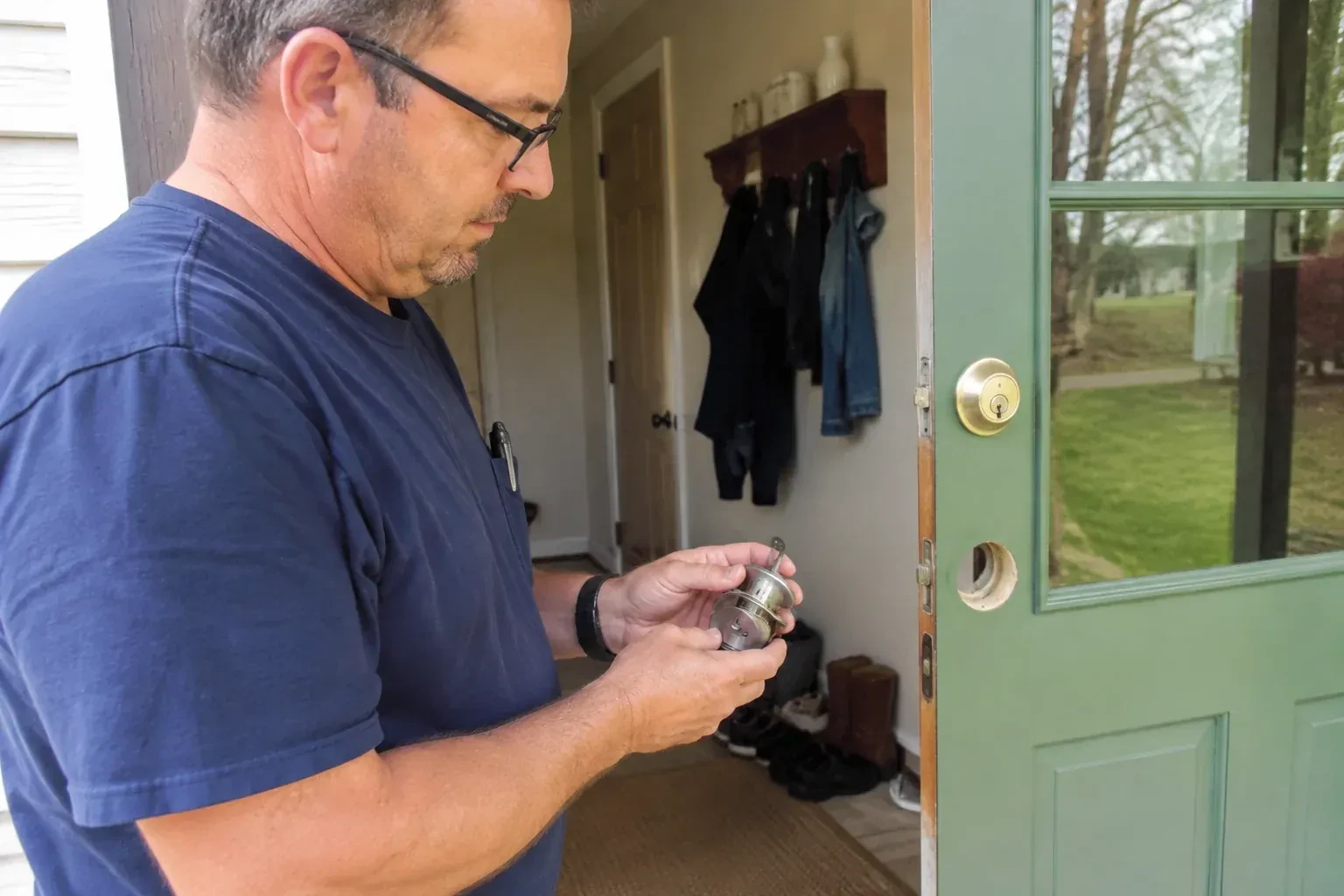
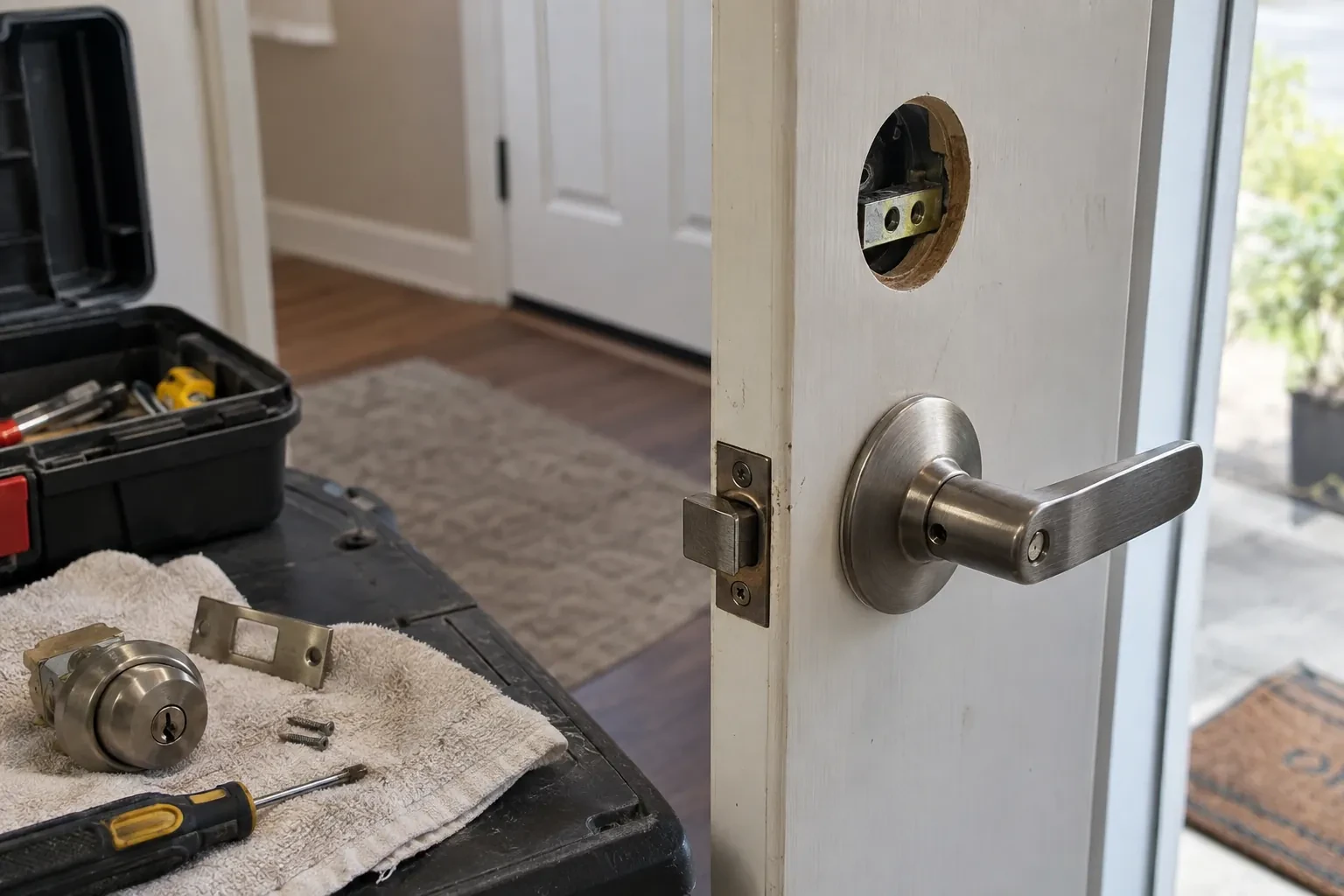
Before blaming the lock, the locksmith looks at the key. A key that has been copied from another copy several times drifts away from the true cuts, a worn key no longer lifts the pins to the shear line, and a bent key binds before it is fully seated. If an original or a rarely used spare exists, it is tried; a lock that opens with the spare has told you the problem. Some cylinders also retain the key until the plug is returned to its neutral position, and a key that seems trapped may simply be a plug that has not come back. A fresh key cut from the code is a common outcome.
Taking the load off a bound bolt
When the door is the cause, the opening is a matter of leverage rather than tools. The locksmith lifts, pushes or pulls the door to bring the bolt back into line with its pocket while the key turns, and the bolt slides home. With the door open, the reason is dealt with: hinge screws tightened or replaced with longer ones that reach the framing, a hinge shimmed to raise a dropped door, the strike plate moved or its edge dressed with a file, the bolt pocket deepened with a sharp chisel, or a weatherstrip trimmed. The lock is then thrown and retracted with the door closed until it moves without any pressure on the door.
A lock that turns with two fingers
You leave with a lock that operates the way it did when it was new: the key seats fully, the plug turns without a wiggle, the bolt throws and retracts through its whole travel, and the door closes and locks without a shoulder. The locksmith has cycled it from both sides and with every key, and has shown you where the trouble was, whether that was a gritty keyway, a broken tailpiece or a strike plate a few millimetres out. If you had a habit of lifting the door or pulling it toward you to lock it, that habit is now retired.
Seized & Jammed Lock Opening
In the van
Penetrating lubricant
Mortise case spring and hub
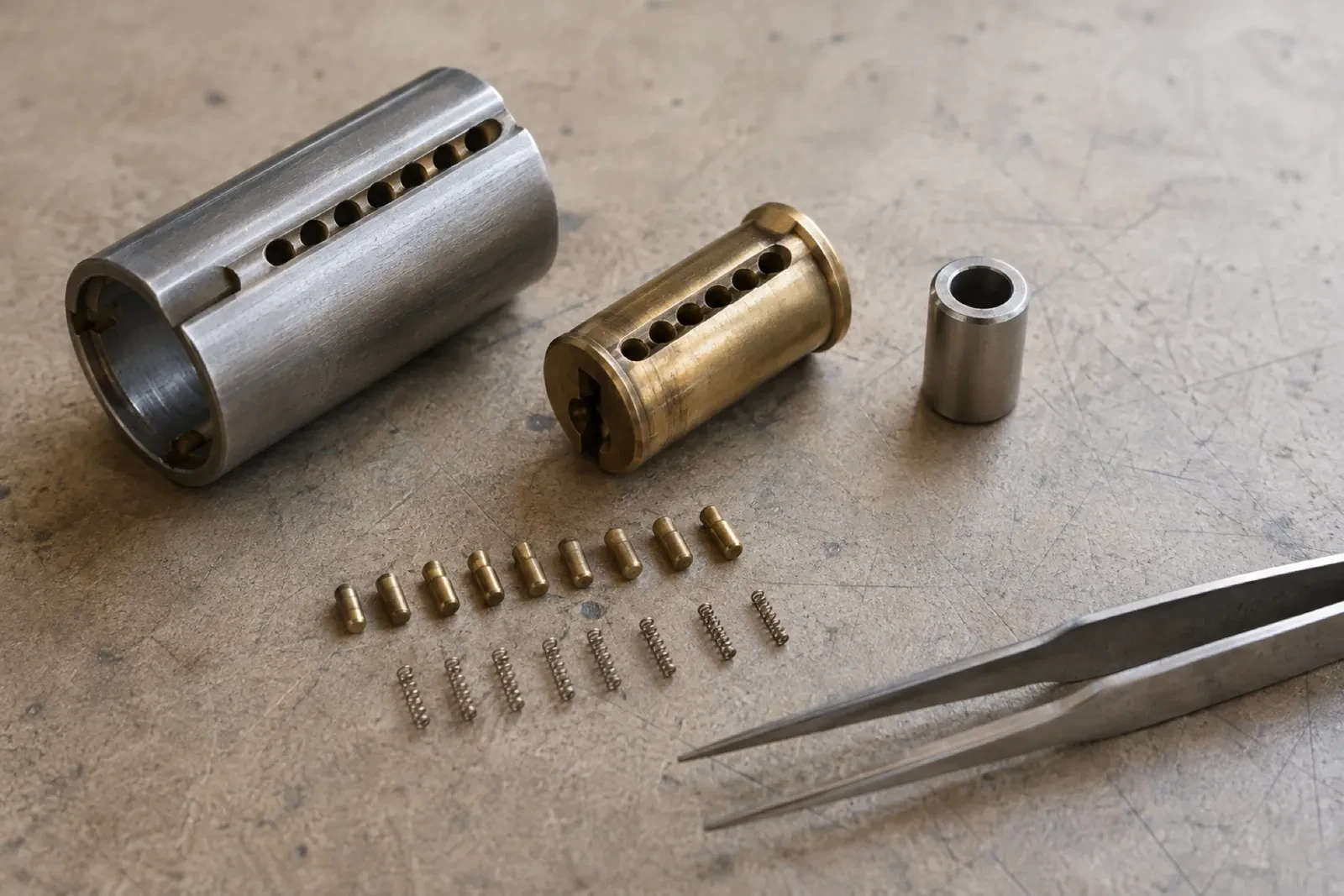
Plug follower and repinning kit
Lock de-icer
Replacement tailpiece or cam
Seized & Jammed Lock Opening
What affects the quote
The drive to you
Driving time is part of every call, and a property at the end of a long rural road is a different trip from one a few streets over.
Type of lock on the door
A residential deadbolt, a knob latch, a lever set, a mortise case in an older house and a high-security cylinder each take different tools and time to open and to service.
Small parts behind the cylinder
Tailpieces, cams, springs, cylinder caps and pins are minor items, but each one used is named on the quote so you can see what went into the lock.
What to have ready
- Does the lock work if you push, pull or lift the door while turning the key?
- Has anyone sprayed oil or another product into the keyway?
- Which side of the building does the door face, and is it near a salted driveway?
Seized & Jammed Lock Opening: questions
QuestionsMy key turns all the way round but the bolt stays put. What has broken?
The key and cylinder are doing their job; the bar behind the cylinder that drives the bolt, called the tailpiece or cam, has broken, slipped or twisted out of engagement. It is a small part. The locksmith retracts the bolt through the mechanism or removes the cylinder to reach it, then fits a tailpiece of the right length and profile. Your cylinder and keys are unchanged afterwards.
The thumb-turn is stuck from inside and we need that door to get out. What should we do?
Use another exit for now and call. From the inside the fault is usually a bolt pinned by the frame or a bent spindle, both of which the locksmith frees without damage. A main exit door should open from inside without a key or special knowledge, so the repair leaves the door doing exactly that, and if the hardware on it was the wrong type for an exit, a thumb-turn deadbolt is suggested.
Is a key stuck in the lock the same problem as a jammed lock?
They are close relatives. A key that will not come out is usually a plug that has not returned to its neutral position with the shell, a cylinder cap that has loosened, debris in the keyway, or a cylinder that is pinned incorrectly; some cylinders are also designed to hold the key until the plug is returned. The locksmith frees the key first, without pulling, then treats the cause the same way as any seized cylinder.