Car keys · Aurora
Motorcycle & Scooter Keys
You dig through every jacket pocket and the tank bag twice, but the ignition key that always sits on the same ring is nowhere to be found.
In plain words
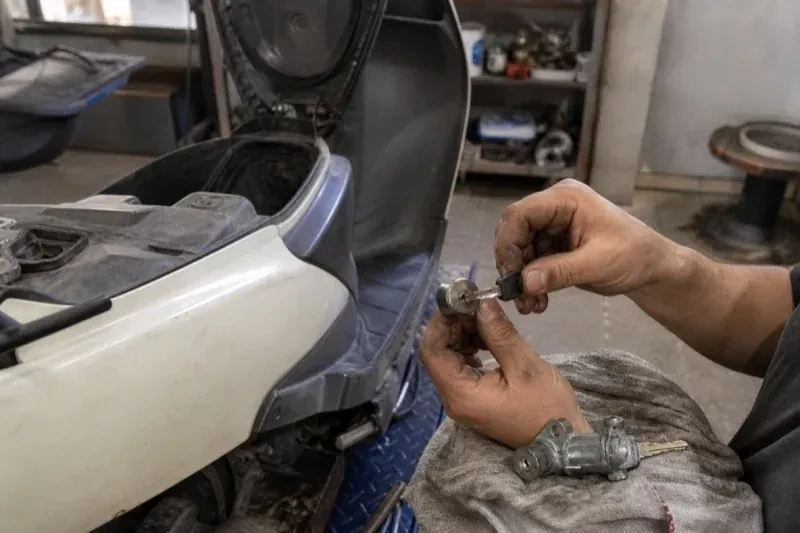
A motorcycle rarely has just one lock. The ignition and steering are usually paired, the seat has its own latch, and older machines add a keyed fuel cap, each of which may or may not share a cut with the others depending on how the factory keyed it. Key service starts by mapping which locks are on the machine and which of them the owner wants running from a single key, and bringing a seat or fuel-cap lock onto the ignition's cut is common where those cylinders are compatible and serviceable, though some models need a matched lock set instead.
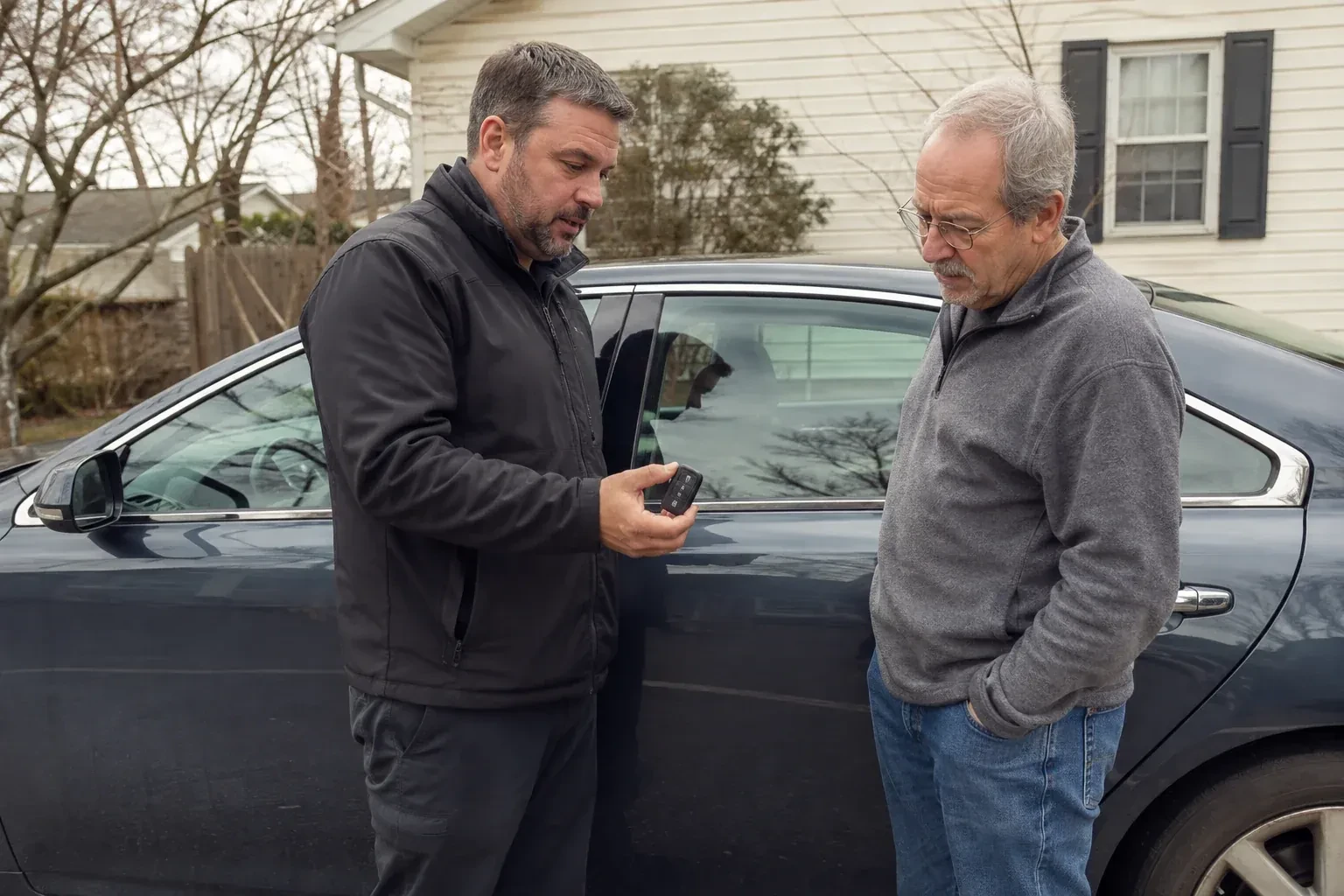
How the visit goesThe dash lights come on, the starter cranks, and the engine simply refuses to catch, though the same key has run this bike since it was new. It could be the key and ignition module no longer agreeing, or an ordinary fuel or ignition fault sharing the same symptom.
Motorcycle & Scooter Keys
How the visit goes
Any prior work or damage
Before starting, the locksmith asks whether anyone has already tried to open or copy the lock: a hardware-store duplicate that never worked well, a bent key left in the barrel, or an attempt with an improvised tool that scratched the keyway. Any of this changes what is found once the lock is opened up, and knowing about it in advance means the owner is told plainly what was already there rather than assuming new damage happened during the visit. It also sometimes explains a wafer that has been sitting slightly out of place for months.
Bringing every lock onto one key
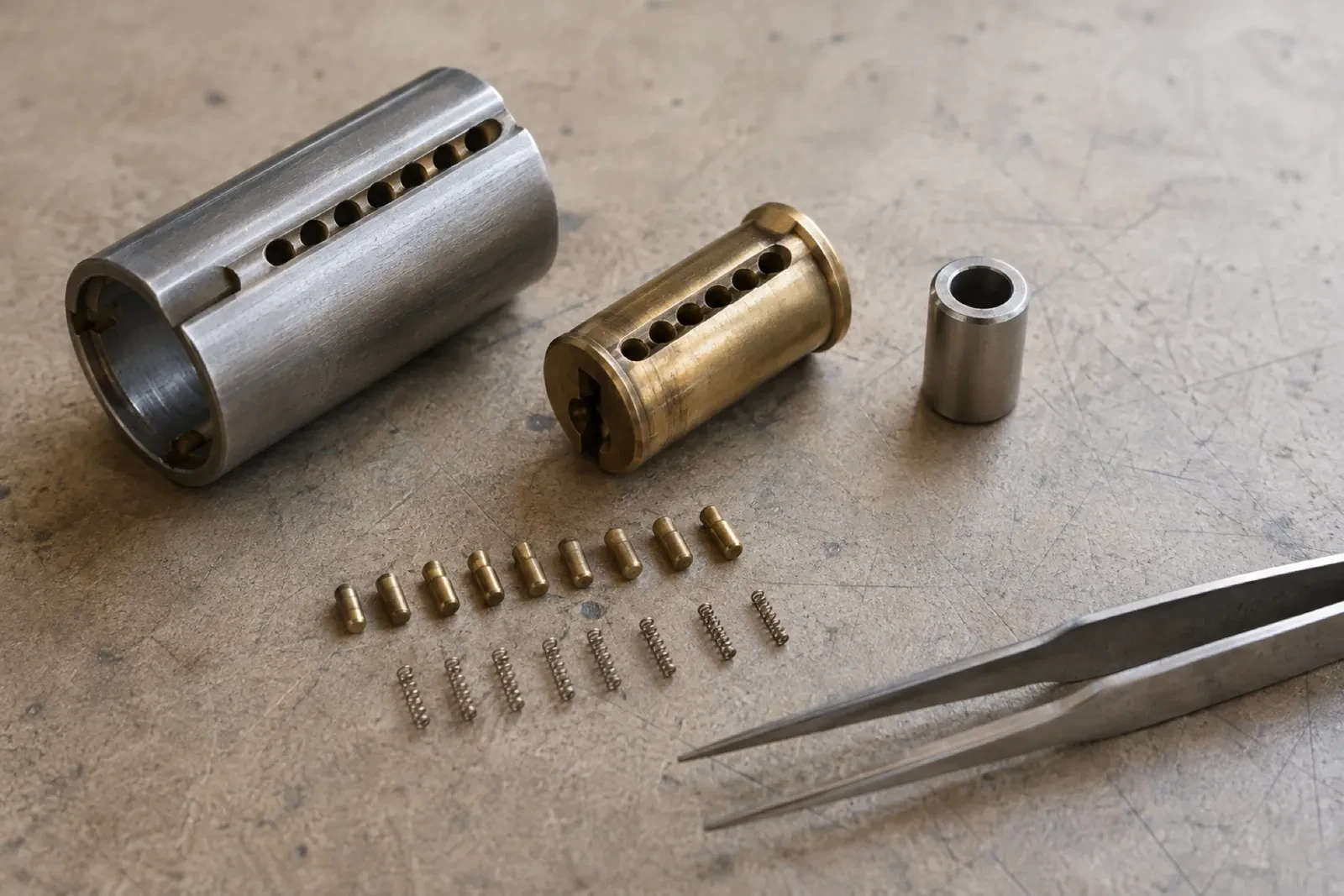
Where the cylinders are compatible and serviceable, bringing the seat, fuel cap and storage locks onto the ignition's key means opening each one in turn, removing its wafer pack, and fitting new wafers cut to the same combination as the freshly cut ignition key; some models instead need a matched replacement lock set. This is the same rekeying principle used on a house or car lock, applied to the smaller hardware found on a motorcycle. Each lock is tested with the new key on its own before the job is called finished, so the owner leaves with one key that genuinely operates every lock on the machine rather than one that has simply been told it should.
Keeping the spare where it helps
A spare key is worth having, and worth keeping somewhere other than under the seat, in a saddlebag, or taped inside a compartment on the machine itself, since those are the first places anyone checks. A drawer at home, a family member's keyring, or a small lockbox mounted away from the bike all serve the purpose without keeping the spare within reach of whoever might already be looking at the machine. Testing the spare on the actual lock, not just assuming it matches, confirms it will work the one time it is actually needed.
Motorcycle & Scooter Keys
In the van
Replacement transponder chips
Torx and security bits
Manufacturer-approved lock cleaner or lubricant
Pick and tension tools
Fob shells and batteries
Motorcycle & Scooter Keys
What affects the quote
Whether a working key already exists
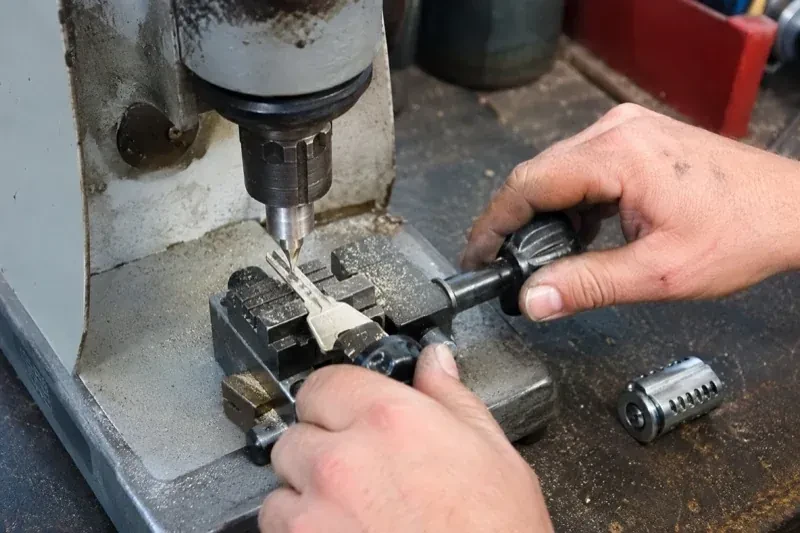
Whether a working key still exists changes the job considerably: cutting or duplicating from one is the more direct route, while decoding a lock with nothing to reference takes longer and shapes the time reflected in the total.
Number of locks on the machine
A single ignition lock is the simplest case. A machine with a separate seat, fuel cap and storage lock involved is a longer visit with more hardware to read, cut and test.
Any security upgrade added at the same time
Any additional item chosen during the same visit, such as a disc lock, an alarm, or a lockbox for a spare key, is priced as its own separate addition to the key work.
What to have ready
- How many keys would you like cut in total?
- Has anyone already tried to cut or copy this key elsewhere?
- Is the machine's VIN accessible on the frame or paperwork?
Motorcycle & Scooter Keys: questions
QuestionsWhy does the number of wafers in a lock matter?
Each wafer represents one depth the key has to hit precisely for the lock to turn, so a lock with more wafers has more combinations and takes a little longer to decode or pick than a simpler one. Most motorcycle locks use around five wafers, and manufacturers sometimes space the depth increments further apart specifically to reduce the chance that an unrelated key happens to fit. This is why an ordinary-looking key rarely works in an unrelated bike.
How do you tell if it is the transponder chip or just a dead battery?
Where the key itself holds a battery, such as a fob-style key, a simple battery swap is tried first and is the more common explanation for a dead-seeming key. Where the chip sits in a passive key with no battery of its own, the locksmith checks whether the ignition recognises the chip at all using diagnostic equipment, which distinguishes a genuinely failed or unpaired chip from an unrelated electrical fault elsewhere on the machine.
Do all motorcycles have an immobiliser these days?
Not all of them. Many machines built in roughly the last two decades carry a transponder chip and an ignition module that checks it, but plenty of smaller-displacement bikes, scooters and older machines still use a purely mechanical lock with no electronic layer at all. The locksmith checks for a coil around the ignition barrel and asks how the engine behaves with the current key to tell which type is on hand.
Related services
- Car Key ReplacementThe key snapped at the head while you were turning it in a stiff, frosty door lock.
- Spare Car Key DuplicationA lockout last month ended with a locksmith opening the door and going home, and the same single key has been carried ever since with nothing behind it.
- Key Fob ProgrammingButtons on the fob still light up and the remote still clicks, but the vehicle refuses to start even with the fob sitting in the cupholder.