Commercial · Aurora
Master Key System Design
A property manager taking over a small commercial building inherits a shoebox of keys with no labels and no chart.
In plain words
The process behind a master key system runs from conversation to chart. First comes a walk-through of every door and a conversation about who needs to open what, now and as the business grows. Next comes the design itself: grouping doors into change-key sets, deciding where sub-masters belong, and reserving a top-level master for a short list of people. Then the cylinders are pinned, cut and tested individually before any key is handed over. What the owner receives at the end is not just keys but a working hierarchy matched to compatible hardware and documented in a chart they control.
How the visit goesA self-storage operator wants the office, the tenant gate and the equipment shed on three different levels of access for staff, but every lock on the property currently answers to the same handful of interchangeable keys handed out over the years.
Master Key System Design
How the visit goes
Who needs to open what
Before any hardware is chosen, the locksmith records the organization's actual shape: which roles, departments or shifts need access to which doors, including exceptions such as a bookkeeper who needs the records room but not the loading dock. This map is built with the owner or manager, not guessed from existing keys, since existing keys often reflect years of ad hoc copying rather than any real plan. The output is a plain list of who should open what, which becomes the target the rest of the design is measured against, well before a single cylinder is touched or a key is cut.
Building the hierarchy from the bottom up
Design starts with the smallest unit, the individual change key, and works upward. Each door that stands alone gets its own combination; doors that should share access are grouped under a sub-master; and a single top-level master is reserved for the short list agreed earlier. Building in this order keeps the levels honest, since a sub-master or master is only created where a real group of doors justifies it, rather than being added because it seems useful in the abstract. The result is a hierarchy that matches the organization rather than one imposed on top of it.
Care that keeps the hierarchy intact
A little routine care keeps a master key system working the way it was designed. Cylinders should get whichever lubricant the cylinder maker actually recommends, since that varies by manufacturer and some rule out graphite while others call for a light oil, and a key that starts needing a wiggle is worth attention before it is forced or breaks off. None of this maintenance touches the pinning itself, so the hierarchy stays exactly as documented on the chart through years of ordinary use.
Master Key System Design
In the van
Bench test fixture
Cylinder decoders
Plug follower and key gauge
Key marking tools
Cylinder pinning kit

Master Key System Design
What affects the quote
Electronic locks alongside mechanical keys
Where keypad or card doors need to line up with the mechanical hierarchy, the quote includes the extra coordination of matching access levels across both systems and pinning any mechanical override cylinders into the same chart as the rest of the property.
How many locations are involved
A single building is simpler to assess and pin than several sites intended to share related levels of access. Travel between locations, and keeping the hierarchy consistent across more than one property, both add to the overall scope of the project.
Number of keys cut and marked
Each key cut and marked for a holder is counted individually in the quote, whether it is a change key for one door or a top-level master for an owner. More staff at the same level naturally means more keys cut than a business with only a handful of holders.
What to have ready
- Do any doors need restricted or patented keys for duplication control?
- Are any doors on a barrier-free path of travel?
- Do any doors already use keypad or card-based access?
Master Key System Design: questions
QuestionsHow does a master key system work in a shared or multi-tenant building?
A tenant's own hierarchy for their suite is designed and held separately from the building's shared systems, such as a condominium corporation's lobby or garage keying or a landlord's building-wide master. The two sit alongside each other rather than merging, so a tenant's private levels stay private while common areas continue to answer to whoever already manages them.
Who should hold the top-level master key?
As few people as the business can genuinely operate with. Every additional holder is another way a full-access key can be lost, borrowed or copied without anyone deciding that should happen. A useful test during design is asking, for each proposed holder, whether they need to open every single door on the property or only a defined group; the second answer usually points to a sub-master instead.
How is accountability maintained when several people hold different levels of keys?
Through the chart and issuance log rather than memory. Each level is tied to named roles or people, each key is marked to reflect its level rather than the door it opens, and any change of hands is recorded with a signed receipt. That record names every authorized holder for a door, though it can only account for a key that was never copied, loaned or picked up by someone outside that list.
Related services
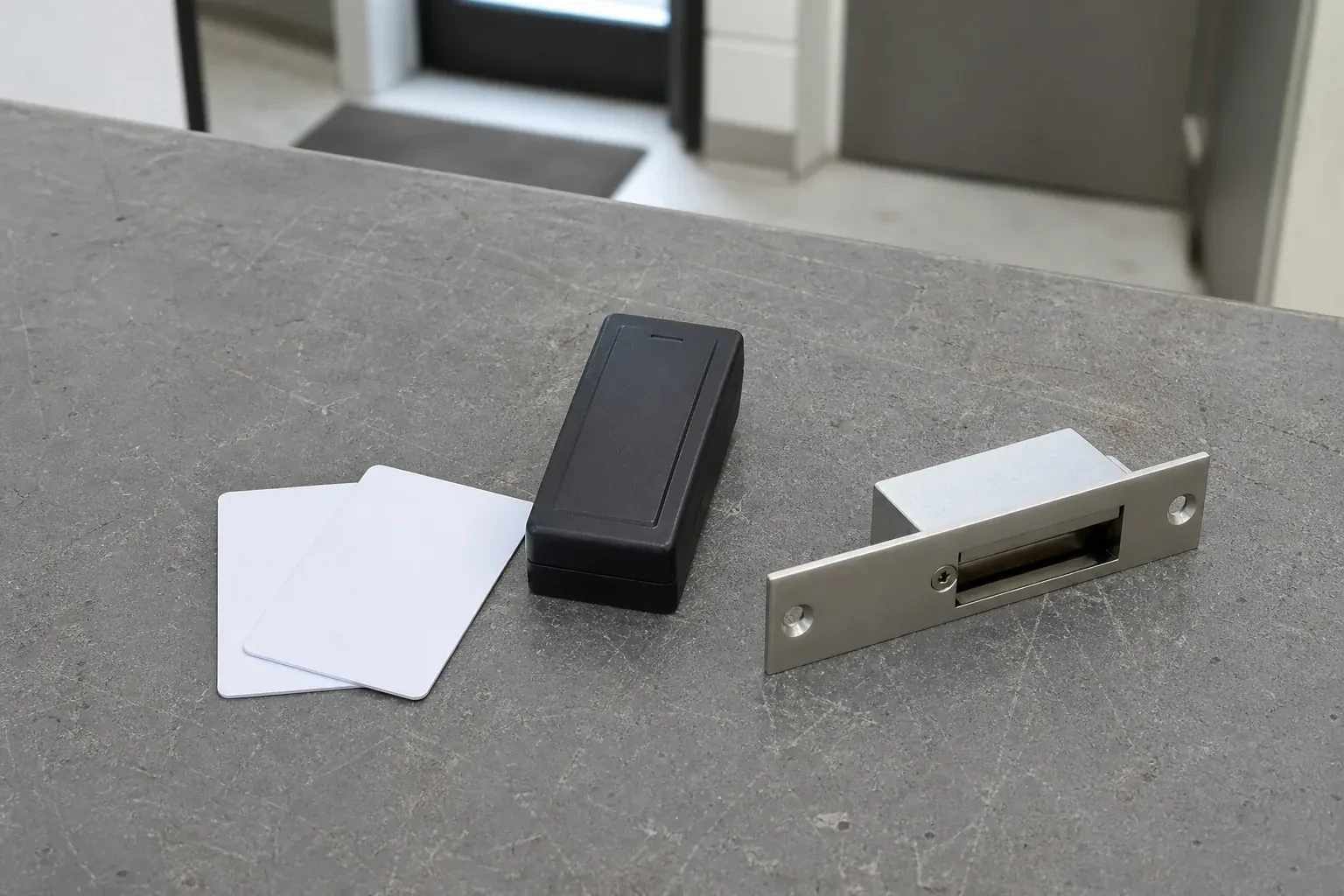
- Access Control InstallationSomething went missing from the storeroom over a weekend, and when you ask who was in the building, the honest answer is anyone with a key.
- Panic & Exit HardwareA padlock went on the stockroom's back door years ago for security and nobody has thought about it since, until the walkthrough this week pointed out that the same door is the room's only other way out.
- Commercial-Grade Lock ReplacementThe kitchen delivery door gets shouldered open more than a hundred times a shift, and lately the latch slips past the strike plate instead of catching it on the first push.